Blog

  • Trip Journal***: CDT Episode I, A Dry Heat (2002, Continental Divide Trail Southern Terminus, New Mexico)

    ***This is a copy of James’ article that appeared in the Chicago Tribune. Please do not distribute this article without permission.

    LETTER FROM HACHITA

    Up a continent, back into history
    The Continental Divide Trail from Mexico to Canada runs into old land claims that have prompted violence, the Tribune’s James Janega finds.

    By James Janega. Tribune staff reporter James Janega recently visited New Mexico
    Published June 14, 2002

    HACHITA, N.M. — Lurching off the tired blacktop of New Mexico Highway 81 in the early chill of dawn, Sam Hughes bounced his battered Ford Bronco up a nameless dirt road, trailing a cloud of dust toward the Mexican border.

    He cursed quietly while muscling the truck between mesquite bushes and across axle-splitting washes, pausing with exaggerated gentility, an unlit cigarette an inch from his leathery face, to ask his three passengers if they’d mind him smoking.

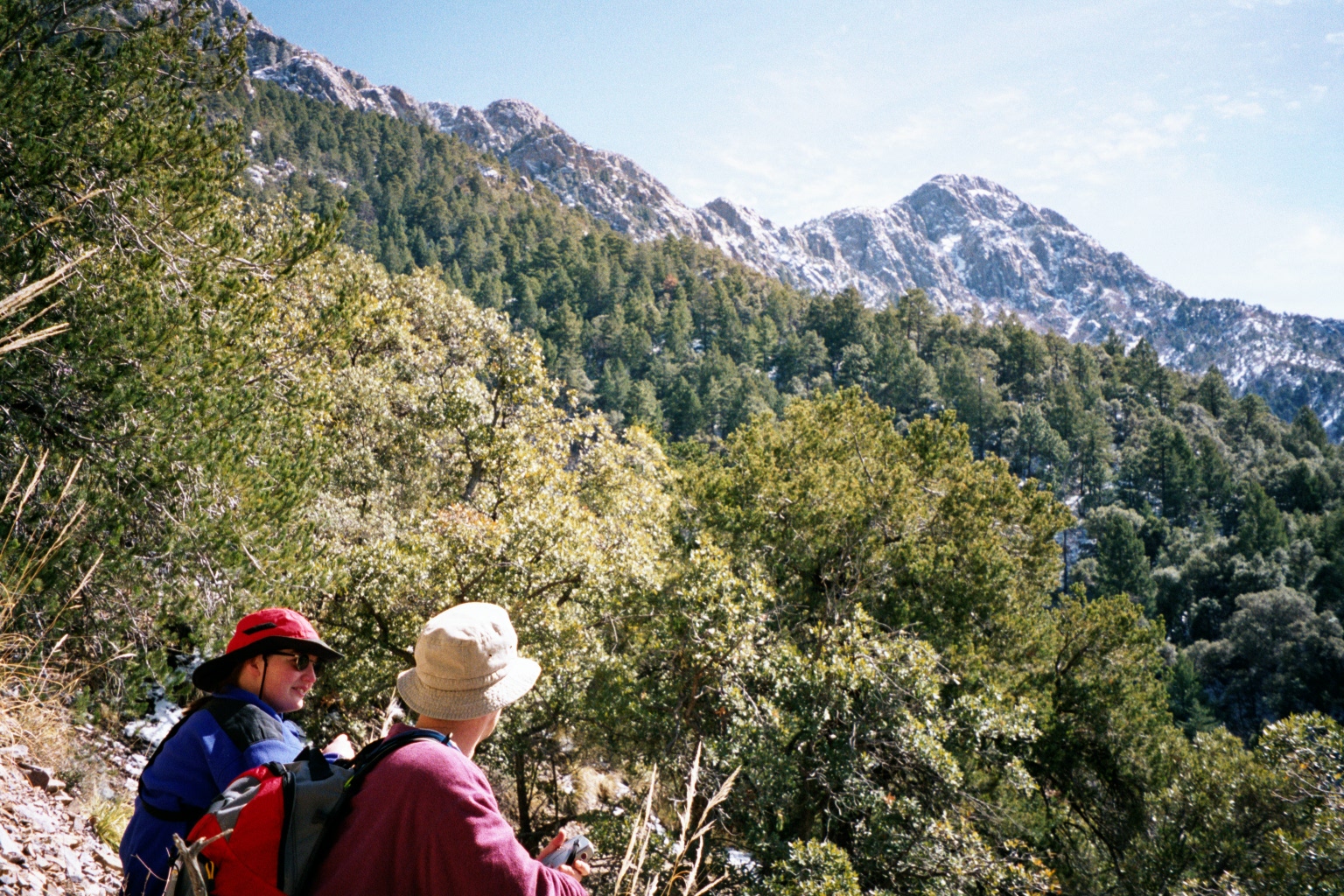
    The passengers were backpackers, and Hughes’ dusty route ended at the beginning of the Continental Divide National Scenic Trail, a nearly completed 3,100-mile path already luring an ambitious few eager to attempt walking, biking or riding horseback along the trail from the Mexican border south of Hachita to the Canadian border at Glacier National Park.

    Authorized by Congress in 1978, the Continental Divide Trail is the longest of eight National Scenic Trails that include the Appalachian Trail, Pacific Crest Trail, Natchez Trace, Potomac Heritage Trail and Ice Age Trail.

    Mist on a dream lifts

    Little more than a fuzzy idea for decades, the Continental Divide Trail has undergone a flurry of construction since the formation of the activist Continental Divide Trail Alliance in 1995 and has seen an uptick of business since a guidebook for New Mexico’s section of the trail was published this spring. Despite guidebooks on the shelves, alliance founder Bruce Ward believes the trail is eight years and millions of dollars from completion.

    Much of that unfinished work is in New Mexico–and it remains that way over a tense confluence of interests involving Jicarilla Apaches, hard-nosed cattle ranchers, descendants of 16th Century Spanish settlers claiming land on the trail’s proposed route, and the unflinching Continental Divide, which meanders through the whole mess like a blind man in a cow pasture.

    To diehard supporters of the trail like Bob Julyan, an optimist whose “New Mexico’s Continental Divide Trail” hit bookstands in March, all those touchy issues add an air of authenticity to the undertaking.

    “If you’re going to go anywhere and experience the Old West, this would be the place to go,” Julyan said.

    Take Hughes, a product of the New Mexico backcountry with a working six-shooter and knack for finding money like water in the desert.

    In the last year he has added a Hachita-to-Continental Divide Trail taxi service to a business card that already reads in part “Sam Hughes: Prospector/Treasure Hunter, Land, Whiskey, Manure, Gold, Snake Oil, Mining Claims. Tigers Tamed, Bars Emptied, Tax Free Investments.”

    “About all you make is pocket change,” he admitted between pulls on a cigarette outside the Hachita Cafe. “But I enjoy taking people up the back roads.”

    What few of his passengers realize is just how authentic an Old West experience they’re getting. In New Mexico, old-timers recall Apache raids in the state’s southern deserts. Descendants of Spanish conquistadors continue a fierce, generations-old opposition to federal authorities over ranch land.

    The federal land around their ranches, they say, is on acreage their ancestors got from the king of Spain and emperor of Mexico. The United States is to them a Johnny-come-lately.

    The whole shooting match, so to speak, had been brought to the fore by the impending completion of the Continental Divide Trail.

    And here’s the shootout

    “There are thousands of trails in New Mexico. They should just come get a compass and go across those,” said Rio Arriba County Commissioner and rancher Moises Morales, a leader in New Mexico’s Spanish land grant movement and staunch opponent to letting the trail cross areas claimed by old Spanish families. Doing so, they believe, is tantamount to releasing their claim on the land.

    Somewhat of a frontier character himself, Morales took part in a daring 1967 demonstration at the Rio Arriba County Courthouse in which he and a group of other locals attempted to place the district attorney under citizens’ arrest over the land grant issue. The demonstration dissolved into a shoot-out that ultimately involved National Guardsmen and sheriff’s deputies.

    “Things have changed now. There are people willing to talk to us,” Morales said.

    Still, he added, “It’s not going to be our people that use the Continental Divide Trail. It’s going to be people with money, and a lot of these people that are going to use this trail are going to be environmentalists who don’t understand our way of life.”

    The disagreement has forced the trail onto a temporary route, often dozens of miles from the Continental Divide, a ridge up the Rockies that separates rivers flowing east from those flowing west. But not even the longest trail can avoid every problem.

    “Everywhere you go on this trail, you run smack into these issues,” Ward acknowledged. “If nothing else, this trail is going to help focus visibility on them.”

    Copyright © 2002, Chicago Tribune

  • Trip Journal: Olympic Glory (2000, Olympic National Park, Washington)

    Saturday, July 22, 2000

    Chicago, Illinois, to Tacoma, Washington

    We were bound for a backpacking trip in the Olympic National Forest on the rainy coast of Washington state, though the view out the airplane window was a hazy Georgia midday, long-needle pines speeding past and away, and patches of raw Georgia earth hurtling hundreds of feet below us.

    Tangled greenery flutters by as the plane climbed higher, the lawns in the Atlanta suburbs seeming lumpy, as if the people living there were fighting a losing battle with the encroaching shrubs in that hot, humid Southern summer. Then the haze closed in, subtracting the landscape shade by shade until all that was visible on the ground was tiny spots of orangish light reflecting off the scattering of sub-Appalachian streams and ponds. They shimmered until they, too, were swallowed by the low, gossamer stratum of damp summer heat.

    Now we were in the clouds, heading at last for Seattle and the Olympics. Mind you, we left from Chicago—three hours of traveling already, counting our layover in Atlanta. (In trying to find the cheapest airfare on Priceline, we’d agreed to one layover.)

    Only after committing to buy the tickets did Priceline tell us our layover from Chicago to Seattle would be in Atlanta. Rarely do you get to see the entire United States in a single day.

    What a bargain.

    I am sitting next to Matt Cassidy, and he looks taller than when I saw him last week. He did so much paperwork to coordinate the travel plans of nine people – on different flights, leaving from different cities at different times – that he called me at work a few days earlier to tell me he refused to organize anything more complicated than making his own peanut butter-and-jelly sandwiches for the rest of the week.

    “I’m done, dude.”

    “Okay.”

    “Once I get to the airport, I’m just along for the ride.”

    “Fine.”

    Lifting the weight from his shoulders must have felt good; Matt actually looked relaxed, a rarity.

    Across the aisle sat Al Smith, Matt’s boss in the realm of their day-to-day work, which for Al and Matt meant coding software for financial institutions on LaSalle Street. Al is a jolly type – picture a black Willard Scott, and you have the idea – and says he has never done something like this before in his life. I’ve been troubled by such statements before, but coming from Al, the cheerful admission just seems like I’ve being let in on a good joke. All of us were eagerly looking forward to sharing in his discoveries. The man could find the humor in watching his dog getting run over; I couldn’t conceive of a situation in which tired feet would send him over the edge.

    Beside Al was my sister Jessica, a regular on such excursions, though we’re seldom on the same trips. The day after we return, she’s leaving for Memphis to start graduate studies there in psychology. She’s pissed at me right now for getting the window seat. Perhaps, I think, because she wants to spot Memphis out the window of the plane as we fly over it. Jammed in the center seat of the center aisle, however, she’s making a valiant effort to sleep through the flight. The alternative seemed to be thinking about moving to a new city. The flight from Chicago to Atlanta was two hours, though; if she caught any more sleep, she wouldn’t need another nap until after her dissertation was drafted. I promised myself I would trade with her as soon as we got to cruising altitude. I then intentionally forgot.

    On Jessica’s other side was Dave Gummersall. He’s already wearing the lopsided smile and furrowed brow that means he’s having fun. As opposed to the lopsided frown and furrowed brow that means he’s figuring out an intellectual quandary or is irritated by the haphazard way the world works.

    Truly, here is a man who loves order. Where Matt left off on scheduling matters, Dave seems to have informally picked up. It’s in his nature. We tolerate him because he’s also outrageously funny; an impression he did in the airport bar in Atlanta and some uncanny timing were good enough to have me spraying beer out my nose.

    Dave’s insidious like that. It’s also in his nature.

    Two-thousand, seven-hundred and some miles from Atlanta stands the Olympic peninsula. It juts like a hammerhead towards the Strait of Juan de Fuca, guarding Seattle and the Puget Sound from the North Pacific Ocean. It was formed by the collision of two tectonic plates, a crash that formed the upthrust mountains in the center of the peninsula. On all but the highest of those craggy peaks, a carpet of two-hundred-foot Douglas firs dominates the landscape. On ocean-facing slopes are a smattering of redwoods; near the coast and along rivers grow enormous cedars. Though the plant geni in the Olympics are essentially the same as in the Northwoods of Central Canada, in coastal Washington, the species grow bigger.

    The Doug firs have an average diameter of four feet. The cedars are as wide as a commercial van is long. Even the dwarf dogwoods along the trails wound up looking larger than I remembered them in Northern Minnesota. This, I would imagine, is what the Northwoods must have looked like before they were logged. Once, these enormous forests would have stretched from Maine, across the northern expanses of the Great Plaines, and back down the spines of the Canadian Rockies. Now, the really big trees huddle against the North Pacific coast.

    But the woods here are not ancient, at least not by geologic or even biological standards. The glaciers retreated from this rocky ground only six thousand years ago. This forest has really just reached its prime.

    Another important note about the Olympic peninsula: It hosts the only rain forest in North America. Every year, prevailing Westerlies suck cool moisture out of the Pacific and drop it on the Olympics to the tune of 216 inches or so a year. That’s an average of just over a half-inch a day, or roughly the amount in a day as you’d get in a typical mid-summer cloudburst in the upper Midwest. Every day, spread out all day in a monotonous drizzle that recharges the greenery here so much that walking ten feet off a well-used trail to take a leak is extending an invitation to becoming lost.

    We landed in the rain just after 10 p.m., Seattle time, the kind of rain that isn’t sure if it’s a dense fog or a light downpour. It left streaks across the airplane windows and coated the landing strip and taxiways. Lights from Seatac International were mirrored in fuzzy reflections on the ground.

    At this hour, the airport was nearly empty, and spotting our hosts was easy. Taking great loping strides over the floor mosaics was Tom Janega, Jess’s and my uncle, and a resident of Tacoma. His lanky frame is well over six feet though he has a tall man’s stoop that takes a good inch off him. Below his proud Czech nose is nothing but elbows and knees, wrapped up in a raffish Palestinian keffiyeh, finished off with size-14 hiking boots. He smells, at 45 or so, of patchouli oil. Beside him is a quiet, 13-year-old, toe-headed miniature of him, my cousin Alex, his shoulders shrugged up to his ears and a shy smile defeating his best efforts to coolly acknowledge our arrival. They promise us a pitcher of vodka-tonics at their house.

    “I love it,” Al was saying, relentlessly cheery. “I love it. Ha ha.”

    Behind him, two enormous backpacks were shouldering their way through the fellow travelers from our plane. Underneath the packs were the remaining two members of our group, Scott Steiner and Valerie Harder. Steiner’s long hair is stuffed under a ball cap, and a weak smile was peeking out from under a full beard. Val looked similarly travel-wilted; her typical mischievous grin now a thin line. They had flown in yesterday, overnighted with a friend and done the food shopping earlier today. God knows how long they’d been waiting in Seatac for us to land. My guess, from looking at Val’s face, was hours.

    “Hey you guys.” Scott set down the duffel bag he’d been carrying, and the group’s food clunked heavily to the ground.

    “Vodka-tonics. Vodka-tonics coming up,” Al was telling them. They’d never met, but Al was instantly intimate with everyone, it seemed. “Gonna be all right. Gonna be great!”

    Who could argue with that?

    While people were inside the Janega house, the doors were always open. After dropping our gear in the graying cedar garage and crossing the aging house’s wrap-around porch with heavy booted steps, we squeezed past the half-dozen teens and twenty-something hipsters who were my cousin Nora’s self-described “posse.”

    We lounged together in the cozy living room, sipping the promised vodka-tonics and trading happy stories. A litter of kittens and two enormous dogs shuttled between us. After Nora and her posse went out for the night, talk turned to the Olympic peninsula, our route along the Hoh River trail, and the numerous Sasquatch sightings in the chilly jungles nearby.

    “I didn’t believe it at first myself,” Tom argued. He was a carpenter, and had himself seen a suspicious track while building a National Park Service station on the Pacific coast at Kalaloch, just below the Hoh Indian Reservation.

    “I thought the other guys I was working with were having me on,” he continued. So, he said he mentioned to the Park Service ranger overseeing the area instead of the rest of his crew.

    “The guy went diving for his shed and came out with a bucket full of plaster-of-paris. Dead serious. He said he wanted a cast of the thing for their census. That’s right, their census, Jack. There are so many sightings on that coast that the Park Service tracks their population. By the distinguishing footprints, he says they follow the movements of at least three juvenile males nearby.”

    I never checked this with the local Park Service people—the story is too good.

    “When I said I doubted it,” Tom was swirling his lime around the last of his vodka-tonic and leaning back on a couch, “you know what he told me?”

    “‘Wouldn’t it be strange if the Olympic peninsula was the only rain forest in the world without a large primate that was native to it?’”

    We pondered the suggestion and the next day’s hike as we soaked in the wood-fired hot tub in Tom’s backyard. A blanket hung from a clothesline for privacy protected the neighbors from the sight of our pasty, tired forms. In the garage, the food and group equipment had been divvied up among our packs. The bench seats in the crowded rental van had been taken out to make more room in the morning, and the last of our travel aches were melting off into the scalding heat of the chin-deep water.

    “I wouldn’t mind seeing a Sasquatch,” said Scott. Val looked at her hairy boyfriend stewing in the redwood hot tub.

    “You are a Sasquatch,” she said.

    Sunday, July 23, 2000

    Tacoma to the Hoh River Trail

    The hot tub was too inviting to pass up on a lonely early morning. A steady, chilly mizzle was falling as people began to stir, and before long, Tom was pouring hot tea for the group of people clunking around his porch.

    Al was leaning thoughtfully on the porch railing, peering off into the distance. All I could see in that direction was the street and the side of a neighbor’s house, so I asked what he was thinking about.

    “My kids,” he said with a smile. It is impossible not to like Al immensely. He started talking about what they did for a living, their spouses, and their lives. I was surprised he had children as old as I was.

    “So do you think you’ll be a grandparent, soon?” It was meant as a jest, a prod in case he was fretting about time passing too quickly, or something.

    “I am a grandfather,” he said with another beatific smile.

    By this point, Tom’s dogs happily marauded the portions of the neighborhood within view, though always seemed underfoot somehow when you had a pastry in hand. Alex was the last up, and sleepily threw his lanky form into the gear-crowded mini-van. That was the signal to go, I suppose.

    We left around 8:30 a.m., tracing the southern reaches of the Puget Sound in the gray morning. We were still chatting as we passed the state capital building in Olympia, were growing quiet by the time we passed Aberdeen and turned north onto U.S. 101, and had slunk into an uncomfortable torpor by the time we reached the improbably-named Humptulips just south of the Quinault Indian Reservation. Not even the unlikely sight of crudely made, plywood roadside espresso stands could cheer us up, and our legs were as sound asleep as most of us wished we could be. Only Alex slumbered.

    By 1 p.m., we pulled into the crowded parking lot at the Hoh Rain Forest Visitor Center. Low clouds obscured the heights that surrounded us, but we were back in good spirits after a recent stop at a roadside sign luring us to pause with the simple boast: “Big Cedar.”

    Inland about a half mile, the dirt road stopped and a trail picked up. We stumbled out of the van and along the short trail to what I have to say was the most enormous cedar tree I’d ever seen in my life. It was 30 feet across at its twisting, root-and-vine-covered base, and stretched up and away from us for at least 150 feet, its crown lost in the dense growth overhead. Alex immediately began climbing, and got a good 20 feet up the thing before he couldn’t go any higher. We all looked at the ancient, gnarled tree in stunned silence.

    “Huh,” Matt finally said. “Big cedar.”

    There didn’t seem to be much more to say.

    At any rate, we were back into the swing of things by the time we lurched into the visitor center parking lot and poured out in a chattering mass. I can’t explain why it always takes ten minutes to put on backpacks and get going, but after several false starts and a few entreaties to passers-by to take our pictures as we posed goofily by the trailhead, we finally stepped off.

    My copy of the Outdoor Family Guide to Washington’s National Parks and Monuments has a lot to say about the forest at the beginning of this trail.

    “The Hoh,” it says, “is one of the two wettest areas in the continental United States. (The Verlot area, also in Western Washington, is the other.) Rainfall averages 148 inches a year.”

    Some of it was falling now. Huh.

    The sun, even in July, was a rarity on this trip, not that there was much sky to see beneath the enormous Doug firs towering on either side of the trail. Everything was hushed by a thick carpet of moss that slunk along the ground, ascended the trunks of trees and even sheathed the tiniest overhanging twigs. The Guide told me I was also looking at “a beautiful understory of ferns, lichens, moss, and oxalis.”

    “Excellent examples of nurse logs,” it further assured me, “are seen, supporting trees that vary in age from seedling to stately colonnades of mature trees.”

    All true. It took me a moment to put my finger on why everything seemed so odd though, and then I realized what was missing: birds. I couldn’t hear a single one. The forest near the trailhead was spacious and dim, the trees widely spaced by their enormous crowns hundreds of feet above us. They blocked out direct sunlight, rain and wind noises, and surrendered only the merest glimpses of tree-covered, far-off peaks—and those only when a fallen tree left a gap in the foliage and the clouds hanging in the Hoh River valley agreed to part long enough to provide a view.

    It was a majestic forest, primeval and jumbled, misty and silent.

    Except for the muttered curses of our group as we endlessly adjusted pack straps, or our cheerful banter as we walked along the smooth trail. We ambled and paused often, making way for returning backpackers and rock climbers. Day hikers were still frequent, and everyone nodded in a friendly fashion as we squeezed past on the narrow path.

    We had begun to come alongside the Hoh River, a turgid, gray-green torrent tumbling out of the inland mountains ahead of us. It came and went to our right, like a happily disobedient dog on a woodland hike. Every few hundred yards or so, we would step around a pile of mossy Roosevelt elk droppings, or point out their fleeting tracks. Huge ferns rose above the moss, and huckleberry bushes were starting to come into season.

    “Watch for bears,” Tom suggested.

    We got quieter as we buckled down to the actual task of covering distance. I half-heartedly peered into the thickening forest for a glimpse of curious Sasquatch juvenile males, and miles ticked by until five had passed.

    We detoured onto a side trail that led towards the river. Packs hit the ground with a satisfying thud as we rejected the notion of going farther. The next campsite’s view couldn’t be much better than this. The terrain was much drier and now supported deciduous trees. On the whole, the immediately surrounding foliage was reminiscent of shrubby, Mississippi River bottomland.

    We found a sunny site at a gurgling bend in the river, and here it looked like Alaska: The lonely river churned between rounded blue-gray rocks, and the clouds had parted to reveal a beautiful view of distant snow-covered peaks. Gaps in the dark green mountains nearby revealed yellow-green hills beyond, fading to distant gray-green ridges beyond.

    Shoes came off and we plunged our feet in the freezing water. Yesterday, it occurred to us, this water was a glacier. The diversion didn’t last long.

    We were actually camped on an island—Five Mile Island, it said on our semi-rubberized topographic map. Ahead of us and to our right was bare-headed Mount Olympus, invisible behind the ridge just south of the Hoh River. The patch of glacier visible from our campsite was Bogachiel Peak, ahead to our left. It looked like an hour’s hike from our campsite, but was in fact several miles away. That realization inspired Matt to check the distance from our campsite to the nearest mountain ridge: Two miles. That looked like a stone’s throw. The tufts of the trees along the ridge were clearly distinguishable.

    “How big are those trees?” I asked. Alex shrugged.

    “The same as the other ones.” He gestured to the grove of Doug fir giants we’d passed earlier. A few had fallen across the trail, which required a team of rangers to attack them with chain saws. Each tree looked like a solid afternoon’s work for them. Each one seemed to be nine or ten feet across. Redwoods were mixed sporadically in with the Doug firs, and both were so big it often wasn’t easy to tell them apart. I peered back across the river with newfound respect for the scale and distance of things. The row of hills I thought was on the far bank suddenly became a respectable mountain range. Row after row of giants covered the ridge, dwarfed by the mountains they covered. We’d have to climb that ridge tomorrow afternoon to reach camp on Elk Lake, which meant ascending about 2,000 feet, most of that in the last mile-and-a-half of hiking.

    Not that any of us were dwelling on that. Things so far had gone smoothly, and our campsite was rapidly becoming a comfortable home-away-from-home. Val sat on the river bank watching the blue sky chase away the clouds in the valley to our east. Scott swatted absent-mindedly at the island’s strangely slow flies. Dave was remarking on the huge, glistening black slugs in the grass on the way to the campsite’s outhouse. Someone found a millipede, and a single raven squawked from somewhere downstream, perhaps the first bird I’d heard all day.

    Tom and Alex were sitting on a ground cloth while Tom rummaged through his pack to begin making—I’m absolutely serious—cucumber maki rolls. Jess watched in fascination and the rest of us, who were looking at a comparatively pedestrian meal of spaghetti, eyed him with undisguised jealousy.

    He shoveled steaming rice from the pot on his camp stove. From the depths of his enormous green pack came fish sauce and cucumbers, the peels of which he used to wrap the rice. It was the first of many culinary surprises he would produce all week.

    As the sun set, we banked our cooking fire and gathered around for tea and cocoa. The woods chilled with the dark, and before long, the mosquitoes disappeared.

    The Hoh River, we learned from Tom, was a sort of No Man’s Land between the local Quilayute and Makah Indians. Like nearby Kalaloch (the name means “lots of clams”), it belonged to both tribes and neither. The Makah, however, being adept boatsmen, paddled here each fall when the salmon were running. When they fished at such times, there was no fooling with hooks or even nets. No, salmon ran so thick on these rivers that fishing was done from shore with a pitchfork. So many could be caught that the tribes subsisted on a nearly exclusive seafood diet.

    You could tell the salmon were coming, by the way, by watching the tiny red berries on the plants along the shores, called salmonberries in deference to their predictive properties. They ripened late in the summer, about when the big fish would heave themselves upstream to spawn. Eventually, the fire died down and the cold drove us into our tents. The boiling river became a lullaby, singing its story of salmon runs and native berry harvests.

    No Sasquatch showed themselves.

    Monday, July 24, 2000

    Hoh River Trail, Five Mile Island to Elk Lake

    It was after 10 a.m. when we woke up. The day was sunny and warm, with only a few puffy clouds skudding across an azure sky. The highest mountain peaks remained swathed in cloud cover, but the valley was dry. The change in apparent precipitation from the first portion of our hike was remarkable.

    Though our breakfast of oatmeal packets was less than luxuriant, we gave ourselves an extravagant amount of time to eat it and break camp. It must have been noon when we trailed off behind Alex through grassy bottomland, back across a dry river channel and onto the crushed stone that made up the Hoh River Trail.

    Just as the greenery had changed somewhat, there was beginning to be a barely perceptible rise to our hike. We were only 50 meters higher today than we were when we left the Hoh Rain Forest Visitor Center. In the next half-mile we crossed another brown contour line on our map, another 50 meters of elevation gained.

    This was like a beautiful day in the Northwoods, only more vertical. All the plant species we saw looked familiar, save for their still-jarring sizes. The river remained in view, now, foaming to our right and below us in its rocky bed. The mountains stood out from each other in detailed relief, the views spectacular even at our low altitude. We marched in pairs, quiet conversations rumbling swiftly through a silent forest of firs and moss.

    Alex, whose general confidence suggested he’d been to every hikeable trail in Western Washington, surprised me when he told me he’d never been here. The nearby Cascade Range, he assured me, was absolutely his turf, though.

    “What’s the difference?” I asked. The Cacades run north to south just east of the Pacific coast. One of it’s highest peaks, stately Mount Ranier, is visible from Seattle. You can see it from Tom’s kitchen window. I couldn’t see how different it would be from this.

    “The Cascades are at a higher altitude. Mount Hood, Mount Adams, all those are up there. Mount St. Helens. It’s drier,” he summed up. “It’s pretty cool.”

    With his family, Alex has been trekking around Washington’s wilderness areas since he was 20 months old. He proudly points to his bony shoulders.

    “I was made for backpacking,” he said. “See? The pack straps are right on my collar bones. My whole skeleton supports the weight of the pack.” He sped off jauntily, thumbs hooked farmer-like under his pack straps.

    Sweating way more than I would admit to Alex, I looked back. Tom and Al were chatting comfortably, plodding along steadily. Scott was still grabbing a fistful of bearberries from every ripe bush he passed, which was many, and Dave and Jess were laughing about something philosophical.

    Matt passed by and we agreed that, whether our bodies were made for backpacking or not, life was pretty good.

    It got exciting shortly after we crossed our first rock slide of the trip. The water trickling along its path had just dried from our boots when there was a light breeze from the west and then a sudden POP!

    We all stopped and looked behind us for the source of the noise. There was a sound of rushing branches, and then a crashing thud you could feel through the ground. Nobody saw the tree that had given way, but it was obvious what had caused the racket. Inadvertently, our eyes appraised the enormous trunks around us.

    “If a ten-foot-wide tree falls in the woods…” Val started saying.

    “Wow,” said Dave.

    “…and no one is directly underneath it …”

    “Wow.”

    “…does anyone have to die?”

    “I love it,” Al was saying. “I love it.”

    Just before reaching the Olympus ranger station, the steep and winding Hoh Lake trail climbs up and to the left, back and forth across the face of Green Peak to the Seven Lakes Basin. It’s apparently a popular trip, and the area around the Olympus station is a busy crossroads. Groups are coming down the river trail and camping in the sites nearby.

    The single-room ranger station has an inviting porch, and we ate sloppy peanut-butter-and-jelly sandwiches there with a California woman. She was waiting for her friends to return from the High Hoh Bridge, about five miles up the trail.

    I was embarrassed to discover that this group had camped on Five Mile Island with us the night before. With an early start, they were already returning from a landmark just two miles shy of our campsite. Their arrival spurred us into action. High Hoh, High Hoh, it’s up the trail we go. (No one could resist the pun, but nobody could make it sound as funny as it should have been, either.)

    Within the hour, we met up with the rangers, two young women, one of them walking with ski poles and a bandaged knee. They’d been checking the trail, and reported we were close to the High Hoh, save for “a few little rises,” followed by a “steady incline” on the south end of the bridge up to our camp at Elk Lake.

    We thanked them, and soon realized that “a few little rises” depended on your definition of “little.” And possibly “rise.”

    But they were right. The few mountain ribs we crossed north of the bridge were nothing compared to the two-hour-long uphill monotony that faced us on the other side. The group became so widely spaced apart that Matt and I communicated by radio from the two ends of the train.

    It seemed so easy looking at the map, and frankly, doesn’t seem so bad in retrospect, but my thoughts on the climb when through a steady retrogression from a prosaic “The mountain is lifting me, all it asks in return is that I put one foot ahead of the other,” to the mathematical “One foot vertical for every five feet horizontal. No problem,” to the numb “There is a mountain. I must walk.” And then came “It’s relentless. It’s trying to kill me.” Followed by “Life is a meaningless existence of suffering.”

    The sun bored through the gaps in the branches and sucked the sweat out of scalps and backs. I struggled to keep my breathing regular and worried at the lack of water in my canteen. Thighs burned as the trail climbed and wound its switchback path up the mountain. Now Glacier Creek was ahead of us; now behind us. We ascended into cloud level, a welcome relief from the heat, though the fact that we could never see the top of the relatively small mountain we were climbing became something of a torment. People in the group were simultaneously above and below, ahead and behind. The only cheerful person was Alex and possibly, far ahead, Tom.

    Just when I was about to call the whole thing off, I looked down and to my right and saw a tiny Scott and tiny Val standing on the near side of a deceptively precarious-looking log bridge. We had just risen above a tumbling, 100-foot waterfall on Glacier Creek, and at this distance, the bark-stripped tree looked like a toothpick.

    “You’re going to love this,” I called into the radio for Matt. Judging from his periodic reports, he and Al were perhaps a half-mile behind us but moving steadily. “At least we’re near the top,” I added for thin comfort.

    I descended to the log bridge, where Tom and Alex were also waiting. Up close, of course, it was enormous. You could have walked horses across the broad trunk. Some kind soul with a chain saw had even flattened the top into a foot-wide pathway. A second giant tree had been felled within leaning distance to the right. Below us, the creek raged out of the mountains and hurled itself off a cliff just out of view. Upstream, pointy, tree-covered peaks watched our progress.

    “This was worth it,” Scott said. Tom was waxing poetic about the purity and grandeur of the alpine wilderness when Al and Matt came around the bend above us.

    “Oh, hell no,” Matt reported Al saying when he saw the bridge. “Uh-uh.”

    It was a springy but uneventful crossing, and a level trip to the surprisingly crowded Elk Lake campground. In the end, we doubled back almost to the bridge to a spacious site. A sign said it was the highest point where you could camp with horses (“Horses?” shrieked Dave. “You mean we could have done it with horses?!”), but more importantly, it was also the highest campsite where we could have a wood fire. Any higher and we’d have to cook on stoves and tell stories in our tents.

    We made a hurried camp in the fading light. We had left rain forest sometime yesterday afternoon, crossed a relatively dry but still lush northern forest, and then ascended in the last hour or so into the realm of cloud forest. It never rained but was never dry. Cool, dense moisture drifted through the trees, became trapped in the fir needles and drummed out and endless tap…tap…tap onto the eager ground below. Verdant moss was again a common fixture, carpeting everything. Our campfire sizzled to life and water was drawn from the river. We settled into a lazy evening.

    It’s surprising how recent geological and human activity in this part of the world is. The United States as a whole has an extraordinarily brief human history, compared to European countries, and it’s weird to think that places like Astoria, Oregon, and Seattle didn’t really get settled until the early-1800s, and even then existed mostly as coastal fishing and logging operations.

    The first white people into our immediate region, however, weren’t Americans, or even British. They were Russian traders. The first white woman into the area, Tom told us, was the wife of a shipwrecked Russian captain. They found their way ashore, where the husband made his way back to coastal settlements to try to find help. The wife became a slave of the local tribe and then the bride of one of its members. The husband never managed to return to get her. Pleasant, eh?

    Actually it was, compared with other tales of ritual cannibalism that marked the time and place. But the favorite stories around the fire were about Sasquatch incidents.

    The juvenile males are believed to be the ones most seen. Like any teens, I suppose, they seem to be attracted to construction and logging sites. Whether it’s because they’re shocked by the wholesale leveling of timber or think the big yellow construction machines are awfully cool, I don’t know. But their outsize footprints apparently show up a lot, if you believe the stories.

    Some time ago, a group of local hunters didn’t think there was much to the rumors. That is, they didn’t until they spotted one of the unfortunate creatures on one weekend foray. Being four or five grown men emboldened by strong drink and high-powered rifles, they did what comes naturally: They shot the Bigfoot and dragged him back to their hunting cabin, convinced they were about to collect some serious prize money. One can almost imagine their discussions about amusement park rights.

    At any rate, their giddy ruminations that night were interrupted by the sudden arrival of a 200-pound boulder as it came crashing through the roof. Diving under beds and tables, the local meteor shower continued for an hour, medicine-ball-sized stones being the average projectile weight as they hurtled through the roof and smashed to the floor. Outside, a continuous and chilling chorus of howling accompanied the bombardment.

    At some point, the door crashed open and a small number of enraged yetis burst into the cabin, seized their fallen family member and exited rapidly. The rock pelting subsided and silence returned. The shaken hunters returned to town the next day with a good story but nothing else; their cabin was clearly destroyed by a hail of large rocks, but no sign of a dead Sasquatch could be found.

    And here you begin to see Tom’s point from the other night: Anything could be out there in those woods. Trying to walk even a few feet off the trail quickly becomes a tiring exercise. White people haven’t been there very long, and don’t much venture into the deepest and darkest of forests, the margins of which provide the steadiest and most inexplicable supply of Sasquatch encounters. Local Indians, by the way, throw up their hands, look quickly away, and refuse to talk about the “hairy people” that live in the woods. Talking about them, they say, brings them down out of the hills.

    Fair enough. We drifted off to sleep, water droplets falling from the trees in a steady pat-pat-pat on our tents, our feet throbbing in a noiseless echo.

    Tuesday, July 25, 2000

    Elk Lake to Blue Glacier

    How breakfasts on this trip didn’t start until lunchtime is beyond me. All of us were staying up late and sleeping in, though. Especially after yesterday’s uphill slog, most of the group didn’t want to consider too seriously the possibility of breaking camp and going farther uphill.

    So the decision all of sudden, around 1 p.m. or so, to day trip up to the foot of Mount Olympus came as a surprise to everyone, even me, and I may have suggested it. There was a slow-motion scurry for jackets and day packs, and a half-hour later, we limped up the trail, past lilypad-choked Elk Lake, and up into the high mountains.

    Matt alone stayed behind, nursing a sore ankle and making us promise to keep in touch by radio. The hiking actually became quite pleasant without the added fifty pounds or so of the packs.

    “We gotta eat more PB&J’s,” Dave said at one point in the conversation. “I’ve got about ten pounds of peanut butter in my pack, and I’m not carrying all that again tomorrow.”

    “I’m not hungry enough,” Alex started to say. “Well … how much? Ten pounds? I could do that.”

    “Please do.”

    “I want to be 14,” Al said.

    “So eating ten pounds of peanut butter wouldn’t matter?” Val asked.

    We’d started calling Alex “The Rage” because of the band t-shirt he wore the whole trip. He’s kind of a taciturn youth, not at all Rage-like, so the name instantly took. The 13-year-old was also becoming the group mascot, and we were all looking forward to his birthday the next day.

    Tom said he had something special in his backpack, and I wouldn’t have been at all surprised if it was a chocolate birthday cake. Last night, he’d pulled out a package full of smoked oysters to eat around the fire, and today he was sharing a plastic box full of salty homemade beef jerky. My Inner Stomach was at peace. At no point on this trip did anyone complain about being hungry.

    Dave was still trying to talk people into a trailside peanut butter snack and I was still getting over the woozy dehydrated feeling I’d woke up with when the first stunning views presented themselves.

    We were still well below the treeline, though the Doug firs here were a paltry two feet wide at the base. Making our way across a scrubby hillside covered in what appeared to be witch hazel, we could see Elk Lake two hundred feet below us, as well as the slopes of the mountain on the other side of the valley before rushing clouds again swallowed the view. Above us, the mountain, actually a rib of Mount Olympus, stretched steeply out of sight into more clouds.

    We are moving on a narrow trail around the edge of the mountainside. Every now and again, a vein of exposed rock would poke through the understory on our left, while to the right, the valley dropped steeply away, nine hundred feet down to the mist-veiled main stream of Glacier Creek. Soon, even it’s rushing presence was silenced by vertical distance. Our crunching footfalls became the only sound.

    The valley here is still wide, a mile to the cloud-hugged mountain slope on the far side. The whole of it is never glimpsed at once.

    A mile or two up the trail, it rises suddenly and turns sharply to the left, and looks as though a hiker could simply walk off into space. The valley below is partly visible now, at least the portion immediately below us. The corner ahead was filled with gray light, not at all like the comforting overcast of the forest.

    Around the corner is a narrow rock slide, perhaps 30 feet across, which now doubles as a stream. The trail on the other side of the slide is thinner, maybe eight inches wide. It slopes precariously downhill and is muddy from the stream nearby and constant cloudy mizzle. After another 20 feet or so, it widens out and gets drier but, what with the 700-foot drop inches away to the right, it was enough to get hearts pounding for awhile.

    We move through some more woods, tracing a contour line around another of the mountain’s ribs. Behind the next blind corner is a broad mudslide, dry crumbling dirt that is the same color as the trail, suggesting things have moved recently. We wonder whether the tenuous, sandy footpath traversing it will support our passing. The slide is about 40 yards wide here, the incline very steep, maybe 50 degrees. It’s a terrifying sight, looking as though the whole thing will slide again under your weight. We cross one at a time, each step mushing into yeilding sand, sending a shower of the stuff and a few gravelly rocks on a bouncing trip into the clouds below. We can watch the rocks jumbling beneath us for perhaps 200 yards, and then hear them keep going for a ways after that.

    After that, we were back on a wider trail that moved us away from the edge and up a gentle slope into the trees. The woods here are chillier, darker and grayer than the verdant jungle near camp and below. We are also back in the clouds, which trace like ghosts through the forest, dampening everything they pass.

    Soon we pass our first muddy snow patch, which provides grist for a foggy snowball fight. We slog through a chill mist to a damp wooden shelter in the trees just below Glacier Meadows. There is a snowy camp behind the shelter, and its occupants are returning from the trail above. We eat sausage and beef jerky and talk to them as they unbuckle brightly-colored gaiters and shuck snow pants from their legs. One of the men stabs his ski poles into the ground and tells how they were repulsed on a summit attempt on Olympus, which he says is completely socked in by clouds.

    Up the foggy trail to an empty ranger’s yurt—the circular pre-fab cabins common in the Northwest. Just feet from its front steps is a bear-scratched tree; beyond that, a flower-studded meadow. Above it were the bare tops of the mountains, streaks of snow and vertical meadows stretching down old avalanche slopes on its face.

    The clouds were thinner here, revealing jagged, rocky peaks all around. A terminal moraine formed a looming, slate-gray rocky hill, covered at its base by a carpet of mountain flowers in a pink, purple, yellow, blue and red—a startling contrast against the brown rocks and gray skies. Below, all was green, in bright and dark shades and every one in between.

    And most dramatic: An azure sky beamed benevolently above.

    We scrambled up a rocky esker to the base of the nearest snowfields, and refilled our canteens under the dripping snow—the source of Glacier Creek, which in turn feeds the Hoh River. Here it is a thousand leaky faucets beneath a sheet of ice overhanging bare rocky ground.

    I do mean rocky: There were big rocks the size of Volkswagen bugs. A few boulders were bus-sized, and there were thousands that looked like petrified 30-pound frozen turkeys. Some were round, others jagged, some both. There were ankle-turners, knee-knockers, thigh-straining chunks that looked like part of the mountain.

    Alex called to us from the top of the moraine. As we hustled up to meet him in a saddle between two buttresses, we were greeted by an impossible view of the Blue Glacier to the south. It was a mile-and-a-half wide though it didn’t look it. Far and away were the east and west peaks of Olympus, neither of them visible in the scudding clouds at that altitude. From its shoulders, the Blue Glacier poured down the valley, turned sharply beneath the ridge we were on and dove in an icefall into the alpine fastnesses below. Wide, yawning blue crevasses criss-crossed it, ruled out walking onto it.

    As if to illustrate its geological power, it cleaved a van-sized chunk of rock from the buttress to our left with a pop and sent it crashing and rattling across its surface. Those of us standing in the saddle watched all of this in silence.

    After some time, we scrambled to the top of the right-hand buttress for a better look. Wind whistled around us and daylight was becoming an issue, but we stayed atop the pinnacle for another half-hour anyway. As a reward, for one fleeting space between clouds, we saw the snow-capped peaks first of Mount Matthias, then Olympus’s east and west peaks. Reluctantly, we descended and returned the way we had come.

    An hour from camp, I radioed Matt and, bless him, he had a steaming pot of jank ready for us by the time we arrived. It was obscenely rib-sticking, starchy and warm, and made a satisfying plop-gubble-bloop sound as it boiled away. On another day, it might have been nauseating, but we ate it gratefully, even Dave, who hates it on the best of occasions.

    Wednesday, July 26, 2000

    Elk Lake to Sequim, Washington

    A bear came into our campsite last night.

    We had a pretty good idea it might happen, given the bold thrashing a bear gave the tree just outside the Glacier Meadows ranger station door. With all the summertime human traffic down in the valley, the bears have been forced into the highlands, where competition for berries likely sends quite a few foraging into campsites.

    Not that our visitor found anything last night, mind you; all week long, we’d been using the steel cable bear bag pulleys installed at each campsite by the National Park Service. Still, Tom and I, in our tent closest to the campfire and drying dinner dishes, heard him shuffle into camp in the dark of night.

    “Holy shit!” Tom whispered, more excited than worried, I thought. “You hear that?”

    Since there aren’t many metallic clanking noises in the woods, the racket just outside the tent had attracted my attention, I said.

    This fellow had to be a black bear—there weren’t any Grizzlies on the Olympic peninsula—and judging from the height of the scratched up trees along the trail nearby, he couldn’t be all that big.

    “Let’s scare him off,” I suggested. I was thrilled that for once, I wasn’t the only light sleeper to hear a foraging animal outside.

    What happened next was a comedy of clumsiness.

    Intent on startling this poor bear by bursting with affected fury out of the tent, we nonetheless made a bigger clamor unzipping ourselves from out sleeping bags, grabbing flashlights and “easing open” the velcro door flap than that big clumsy critter was making outside.

    The key to the element of surprise is not to give it away. All we saw or heard of the bear was its heavy gullomph-gullumphing away and off into the woods as we unzipped the tent. Nothing much had been disturbed, and the bear bags were still unharmed, dangling from a steel cable twenty feet off the ground.

    Scott joined us as we shone our flashlights into the trees, hoping to see some eyes reflecting back at us. Nothing.

    “Shit,” I said softly.

    I had the confidence of a camper who knew his site to be bear-proofed. Just to be on the safe side though, Scott and I lowered the bear bags to be sure a squirrel hadn’t climbed into them. Then, with nothing more to do on a damp night, we all went back to bed.

    This morning, Tom said he was dreaming about carpenters when he woke up to a sound not unlike a two-man saw being worked.

    Scott found the evidence, about fifty yards uphill from camp. One tree had already shown signs of bear scratches, but this morning, the two adjacent trees bore fresh claw marks, sheets of raw pine bark littering their trunks. There was Tom’s early-morning sawing: We scared that bear off, but he came back when it was safe to show us who was who’s guest in the woods. I’d never gotten the finger from a bear before, but the gesture was unmistakable.

    There was another distraction this morning: Alex turned 14. We serenaded him with a cacophonous rendition of Happy Birthday and Tom produced a packaged chocolate cake product for him out of his bottomless pack.

    In return, The Rage told his tent mates to “get off my dirt-farm” when they crossed his sleeping bag to reach the door. (Alex likes his sleep.) He threatened either Al, Dave or Matt—maybe all three—with “I’ll cut you, man” when they persisted.

    This earned him Rock Star status.

    The weather was different than yesterday. Then, camped at cloud level, we had been drenched by passing mists. Today, it out-and-out rained.

    We slowly packed up a soggy camp. Despite our best efforts to leave early for Five Mile Island, we didn’t leave until noon. Alex, laughing this morning, was sullen and wanted to go. To tell the truth, most of the rest of us couldn’t see what else we’d do along the Hoh River Trail, either.

    What followed was a marathon descent reminiscent of the retreat from Moscow. By the time we’d reached the Olympus ranger station halfway down, someone had suggested we make a bee-line for the car, camp somewhere on the coast and get pizza that night. The idea caught fire, especially with The Rage, and aside for a stop every five miles or so to soothe aching feet, blisters and joints, we backtracked all the way to the Hoh Rain Forest Visitor Center, a total of 1,800 feet and 15.1 miles in six-and-a-half hours.

    The return trip was a blur of stabbing footfalls and fading light. We arrived in the parking lot at dusk, shunning the concrete trail that made up the last few hundred feet because it shot jolts of pain through our tired joints. To add insult to injury, we had to change a flat tire before we could drive off, but once we did, we applauded our decision to leave rather than camp again in places we’d been before.

    We had pizza in Forks, an old logging town which may be the only town in the world where we could have limped in looking like a shipwrecked crew, smelling like firefighters who just extinguished a blaze in a high school locker room after the big game. Instead of being treated like lepers, the owners and sparse assembly of diners welcomed us, stopping often at our table to ask about our trip and where we’d been.

    Feeling pretty good, we toasted Alex with micro-brewed beer as he sipped his Pepsi.

    I’d have been happy to call that a day, but what ended up happening was a four-hour van ride from hell. Hoping to find an open campsite on the coast, we ended up on the peninsula’s north shore, turned away from campgrounds near Lake Crescent, Port Angeles and Dungeness.

    Not that good conversations didn’t happen along the way. After just a few days in the wilderness, looking at civilization is a rude shock; we lamented that for most, this was the “real world.”

    Among all our fantasies of moving out to the Pacific Northwest, we were surprised to hear Al joining in. And of all of us, he was the only one capable of actually going through with it. Having never been in the woods before, Seattle was now on his short list, he said, of places he’d consider to move.

    In retrospect, it seemed he had been spending more and more time by himself watching the far-off mountains. Similarly entranced by the area’s lure, I felt a great kinship with him for that, as well as a great deal of respect—I was already a camp-head; Al was a lifelong city person, and we had watched him fall in love with the wilderness in front of us. All along, we had fed off Al’s unremitting positive energy, I now realized, had seen it all with his fresh eyes.

    The flip side is that we were now finding it hard in the land of civilization to be civil. A turned ankle on the trail would have been easily dismissed yesterday; tonight, not finding an open campground was beyond irritating. We became edgy on our backpack benches. Humor took on a sarcastic bent, and in the end we relented and pulled into a chain hotel in Sequim around 1 a.m.

    Aside from its inexplicable, lifesize mural reproduction of Michaelangelo’s The Last Supper in the hotel parking lot, and the picture we took in front of it, there were few bright spots that night.

    Our non-smoking room reeked of cigarettes, and Val sent Scott to the front desk to ask fruitlessly for a new one. (We smelled far worse.) I might have joined in had I not been so bone-weary. There was one tiny briquette of soap to share between the one woman and four rangy men in our room, and only one towel besides. The guys in the other room had similar crucial shortages. Scott returned at least with more towels. By that time, most of us were snoring. He quickly joined in.

    Thursday, July 27, 2000

    Sequim to Dungeness Spit

    We had seen the Northwest. Now came the Pacific. A short drive brought us to the now-open state park campsite on the famed Dungeness Spit. Along the way, Tom bought a proper cake and candles for Alex’s birthday, which we all conspired to hide in the van.

    Shortly after making camp, we hiked two miles out onto the spit, a thirty-yard filament of sand that juts for three or so miles out into the Strait of Juan de Fuca before recurving back towards the peninsula. Across the strait’s numbingly cold expanse, we could see the mountainous shore of Vancouver Island, twenty miles away in British Columbia.

    We were vigorously hunting for Dungeness crabs, which had to be against the law, particularly since the shallow side of the spit was a National Wildlife Refuge. I can honestly report we caught nothing worth eating, though we saw a harbor seal raiding crab baskets just offshore. We watched jealously, but the water was too cold for swimming without a wet suit. We had similar luck digging for clams, which was allowed, but which required a heavy garden spade to get beneath the quickly-burrowing shellfish.

    On the other hand, the view south down the spit gave a dramatic view of the Olympic Range, including towering Mount Olympus and the rest.

    Sequim (pronounced “Squim”), where we stayed last night, is in the rain shadow of the Olympics. Just 16 inches of rain fall there in a year, compared to the daily deluge at Hoh River. Sequim is largely a retirement community, as well as a popular local rain-free getaway, as evidenced by the crowded campgrounds and hotels in the area.

    The scenery on the Dungeness Spit was lovely, but we were clearly back in the world of mankind. As we ascended the bluff over the spit, Scott spotted a nuclear submarine, surfaced and bound for the Puget Sound Naval Shipyard in Bremerton.

    Dinner that night was the fresh seafood we had all looked forward to. But Scott, Tom and I bought it at Safeway, despite telling the rest of the group we were going crabbing at a pier opposite the HHHhboat landing.

    Nobody believed the story, but everyone ate the food.

    Friday, July 28, 2000

    Dungeness Spit to Tacoma

    Back in the van, but for the last time. We are quiet as we drive towards Bremerton, the Navy town where you can catch a ferry across the Puget Sound to Seattle. Classic rock plays loudly on the radio, which seems in keeping with the edgy, blue-collar feel to Bremerton, which looks for all the world like a Massachusetts fishing port.

    We have reservations that night at a highly recommended sushi restaurant in Tacoma (my cousin Nora worked there) and are looking forward to the hot tub in our hotel. The cool breeze feels good in our faces as the ferry starts chugging across the inky Puget Sound, and we get our first view of Seattle from the water, Jessica jumping up and down as she spots the Space Needle.

    We are all on the upper deck, standing forward. Before we round the point, Dave and I look back at the Olympics.

    There, towering above us as always, is Mount Olympus.

    It is wreathed in clouds.

    written by James Janega

  • Trip Journal: Northern Cross (1999, Quetico Provincial Park, Ontario, Canada)

    Diaries: Northern Cross – Quetico Provincial Park, Ontario, Canada

    7/17/1999, 3:22 P.M.

    On I-94 Heading Northwest. We are now entering the lovely town of Long Grove. Three vehicles and five people comprise our transportation for this group (or at least the one’s we’re bringing with us). The vehicles? Well, first we have the Groenewold minivan. The Groenewold’s are Betty’s parents and they were gracious enough to lend us their vehicle…

    The second vehicle is Matt’s Saturn. This car has seen more than a few trips and currently has over a hundred thousand miles on it. The third vehicle currently resides on top of the minivan. It is the Groenewold’s canoe. We will be renting the second canoe from a local outfitter near Quetico. Writing from hindsight resulting from me transcribing this journal into the computer after the trip… I can safely say that all three of these vehicles will have stories of their own before the trip has ended.

    As of now, I have already purchased and partaken of my traditional beef jerky and chili-cheese Fritos. They now reside- along with a healthy swig or five of Arizona Beverage’s Green Tea with Ginseng and Honey- in an uncomfortable lump at the lower half of my stomach. Perhaps it is time to come up with a tradition which is less destructive to my general well-being.

    Oops… As I write this sentence, we are now passing by Great America (the one in Illinois) and Gurnee Mills shopping center… All to the tune of Ride of the Valkyries, on the CD player… Somehow the musical piece seems a bit too… Grand… For a large shopping mall and amusement park…

    OH! I should mention the cast of characters for this trip! Our expedition leader is the fearless Matt “Dances With Trees” Cassidy. The Trip chronicler is none other than the enigmatic Dave Gummersall (when you’re the one writing, you get to chose any descriptive words you want, for yourself… It’s a fringe benefit). Other’s on the trip include: Mark “pack mule” Zeutzius (my apologies, if I misspelled your name, Mark), Dan Klest, and Betty Klest. As mentioned earlier, it was Betty’s parents that supplied the minivan and the canoe. Of this group, three of us (Dan, Betty, and myself) have never done anything quite like this. There have been at least a few times where yours truly has seriously wondered on the state of his sanity…

    3:48 P.M.

    We recently crossed the Wisconsin border- and were almost immediately hit with a short-lived but strong thunderstorm…

    Oops. Never mind about the short-lived part. It’s back…

    I think I’m going to stop commenting on the storm, in the hopes that it will forget about us and leave…

    3:55 P.M.

    It forgot about us. Hey! Now we are passing by the truly unique Mars Cheese castle. One wonders: do they truly get their cheese from the Red Planet?

    …And time passes…

    …Lots of time…

    …Hum de hum…

    …Hours of driving…

    …Through Wisconsin and …

    …Scenic Minnesota…

    High points?

    We hit Duluth rather late in the evening. Close to one a.m. It had transformed into a city of lights. The buildings (warehouses and factories) only were hinted at by grids and strings of lights. We made a traditional stop at a Perkins there for a midnight (actually a bit later) meal- the last “decent” meal any of us would have for a week.

    After Duluth, we hit what must have been some new road, carefully and rather overzealously outlined by reflectors imbedded into the road… Something like ten feet apart. This, combined with a total lack of other lights (either street lights or other…) made for a surreal experience. We likened it to playing some sort of video game.

    SUNDAY:

    It’s late morning to early afternoon. We arrived an hour or so ago and broke up into two groups. Mark and myself stayed at the launch site with the gear, and started to organize. Matt, Dan and Betty went to check in at the ranger station and get the second canoe. They also had to position one of our cars at the exit point of the trip, so that we had transportation when we ended our adventure. We expected them to be gone around two hours… Again, writing from hindsight, I know now that was not to happen…

    While they were gone, Mark and I brought down the canoe and some bags to the river. As we waited, several other groups arrived and put in. At one point, a very large group (twenty-one people) worked its way into the water. Actually, I think it was three groups. There was one guy who looks like he’s in his mid- twenties, and probably a group leader. There was also a boy who greatly reminds me of my friend R.F., as he was in his mid-teens. He was broad of shoulder and body, and wore fatigue pants and bandana. The kid saw my knife and immediately made a comment about its manufacturer and quality. Full of opinions and ideas on weapons…
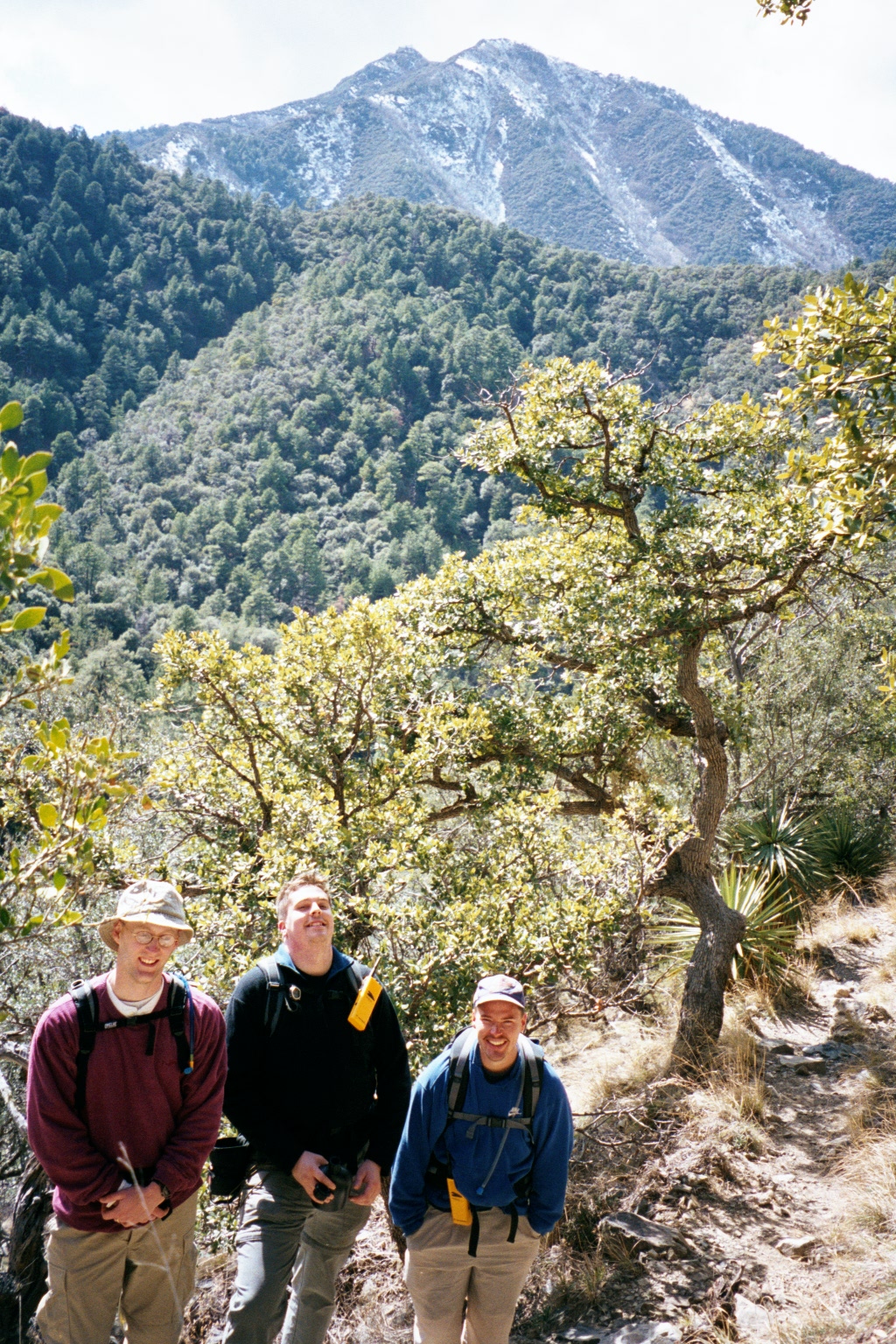
    The kids seemed like a good bunch. They were actually rather quiet, considering the fact that there was a group of twenty-some odd teenage boys going camping together. I’m guessing that the kids were American. One of them had a “Wisconsin Bow Hunters” patch on the right shoulder of a hunting-fatigue style jacket.

    Also, while we waited, we ran across another group and an individual of interest. Mark and I had the pleasure of meeting one Doug Chapman, an outfitter in the area. He was setting up a group of fishermen for a trip into the park. Doug is a bit of a legend in this camping circle, and quite a character. The half of our team who went to rent the canoe rented it from Doug. He was a very friendly and jovial man who delighted in teasing Mark and myself. Unfortunately for him, at least one of his teasings fell flat, as the town he referred to was unknown to either Mark and I. The town was over two hours away and he had told us our missing members were on their way to there… Which would have made their return time even later than it had already been.

    So far, the weather had been great. I wished we were already underway. There were only scattered clouds when we got here, but since then, more clouds have rolled in.

    After an hour or so more, the rest of our party returned and we were on our way. Did I mention that this was- essentially- the first time I went in a canoe? Yeah, sure, I was in one by myself without any gear sometime in high school… But that was only for less than an hour, and I was young and stupid. Now, however, the story was different. We had three people in one canoe and two (plus extra gear) in the second. I was the middle guy in the three person. And oh my, did that thing feel wobbly. Yikes. I started off having fears that we would tip in the middle of the lake and half our gear would go to the bottom. Not to mention the indignity and fear of getting dunked wearing all your clothes in deep water five hundred meters from the shore. Matt, our leader, had strictly enforced a lifejacket-required rule just in case this did happen. I didn’t complain.

    That first day, we canoed seven miles into the park, and stopped at Quetico lake. We had put in at Beaverhouse lake, and had one (short) portage. It was kind of cool, as there was an old log jam dating back to the park’s logging days, running along the portage path. That, and the rusted out hulk of a vintage automobile. Pretty spiffy.

    Upon reaching a suitable camp site and setting up, we commenced dinner. Dinner was tomato soup and grilled cheese, cooked over the fire. We brought canned tomato soup and ate it the first night both to conserve weight (canned food is quite heavy) and to have a special meal for the first evening. It was yummy. Of course, almost anything cooked over a fire after canoeing is yummy.

    We did have a bit of trouble with the fire. There were a few factors involved here, some of which would continue to haunt us the whole trip. First was the relatively poor construction of the fire pit. Then there was the fact that the wood was a bit damp. And finally… We really weren’t very good at starting a fire. The friends of ours who are the so-called “Fire Gods” were not on this particular trip… And they were missed.

    The rest of the whole “making camp” thing went smoothly. The tents went up, and we unpacked our gear with minimal problem. The evening ended just before darkness…

    And now for a survival tip when camping in Quetico: when the sun sets, dive into a nearby tent, zip it up tightly, and don’t come out until morning. All processes, both biologic and logistic must be done at least twenty minutes before sunset. When the mosquitoes hit, they hit unbelievably hard. First they appear as- and I’m not kidding- a pervasive hum from deeper in the woods. Then they come roaring out like something from a “B” horror movie. It’s this unearthly roar that you just have to hear to believe. If you look out of the mesh tent door from the inside, you can see scores of them just hovering outside, smelling you with their tiny, evil noses…

    “Let us in… You smell so tasty! I can smell your blood… Ahhhhh…”

    MONDAY:

    After something like ten hours of sleep, we staggered out and started breaking camp. It was around noon. We had a bit of breakfast. Oatmeal specifically. We had the “and creams” packs. Strawberries and cream, bananas and cream, etc. etc. Everyone was going “oooohhhhh, AND CREAMS!” Yet again, all food is better when cooked over a camp fire, seasoned by hunger. Even cheap oatmeal packs.

    We launched rather late, as no one was moving quickly, but did well. I started out in front of the metal (aluminum)canoe (which we ascertained was more stable, and therefore more suitable for three people) with Betty (still nursing a headache that had started the night before) in the middle and Matt in the rear. The plastic canoe had Mark in the rear and Dan in the front. And so began our canoe route. I was having trouble with the shoulder muscles on my right side. It turned out that a great deal of the problem was due to poor technique (Matt helped me correct it). Technique is very important. Matt told me this at the start, and now I really believed him.

    After a while, we followed a river filled with marsh plants (like thick grass). We stopped at an island at one point to pause, pee, and eat a few Nutra Grain bars (free promotion there…) The island itself was obviously the victim of a fairly recent? fire. Whether natural or man-made (there was a camp site on the island) we couldn’t tell. We saw a few fish, a beautiful blueberry bush, and lots of dead bushes just fifteen feet from the rock edges. After a pause, we were once again on our way.

    Heading up to our next portage, the stream started changing into more of a jungle/marsh type environment. The water got more shallow and there was an abundance of water plants. Some were like large grass (two breeds, one with thicker stems than the other), and others were lily-pad like. One specie of “pad” had beautiful white flowers in the center, while another-which was much more rare- had smaller, yellow flowers. Of course, I know nothing of these plants, which means they could have been one specie. But hey, they looked different. Eventually, we reached our next portage. This one turned out to kind of suck. It was slippery, steep, and muddy. Generally not fun. Carrying canoes over scenically jagged terrain isn’t tremendously fun. We exited at the Kasakokwog lake. This particular portage took a lot out of us, so we found the closest good camp site and stopped for the evening. This site looked nice to everyone. However, it will be forever known to me as the “evil campsite”- as I was getting bad vibes from it while we were there. A rock ledge above the fire pit made for a convenient shelf for our cooking stuff. Dinner tonight? JANK!

    JANK ingredients:
    -Dried stuffing mix
    -Crushed Cheese-Its
    -Mashed potato mix
    -and seasoning…

    All this is thrown together with boiling water to make a heavy mess that has the consistency of fluffy mashed potatoes.

    Seasoning is the key here. Without it, Jank is basically starch with some sort of bland flavor-like substance mixed into it. It has become a goal of mine to enhance this recipe before the next trip I go on. This time, we put little bits of pepperoni (sprinkled on top) into the Jank. The night ended with two things. First was a beautiful sunset. The second was a soap-less bath in the lake. Ohhh! Sooo good. I jumped right in and scrubbed vigorously, right before bed.

    Then the swarm hit. Holy… Cow… It was even worse than the night before.

    That night, I didn’t sleep well (by the way, Matt, Mark and I shared a tent the entire trip). Among other things, something tiny and scurrying tried to get under (into?) our tent several times. I finally found out the identity of our little invader when I caught it climbing the mesh of our front flap:

    A large, brown, mouse.

    Having ascertained the identity of the critter, which had actually scurried under the tent next to me (I could see the bulge in the fabric move between Matt and myself). I slept better from that point on. No more thoughts of gigantic spiders troubling my mind.

    TUESDAY:

    The next morning, we woke up stiff and sore. Dan and I were the first two up. We were rewarded by the sight of two crows chasing a bald eagle from the top of one tree. Pretty cool. Breakfast was a quick couple of granola bars and coffee/tea done on the tiny gas stove we brought.

    We then set out. We had an ideal goal of four lakes and four portages by the end of the day. First, we finished the lake we were at and started shooting through a river. It was similar, but longer than the one before. The current was stronger, and against us. But we made it, and got to the portage point. It was small and easily crossed. No biggie. So we set out to lake McAlpine. Along the way, we saw a couple of canoeists (fishing, as were most of the “canoe people” we encountered). Shortly after that, we stopped for lunch. It was summer sausage and cheese sandwiches. Drinks were Kool Aid and Chrystal Lite from Betty. I had suspicions on the cheese. Next time, we’re bringing the lowest moisture cheese I can get my hands on. Something that can sit on a counter for weeks and still be edible. The cheese-oid stuff we had (in its own wrapper) was mushy and kinda strange. It also left the aforementioned wrapper to take out with us.

    Lunch was fine- regardless of my opinions on the cheese. Shortly after, we set off to try and find Indian pictographs that were supposedly in the area. We paddled along the sides of a cliff-like shore, trying to find these mysterious pictographs for several minutes… Without success. Perhaps they were overgrown by lichens. Perhaps we were in the wrong place. We’ll probably never know. I’m told they were neat, too.

    Soooo… We got to our next portage- forever to be called the “Big Fly Portage” in homage to the biggest damn fly we ever saw during the whole trip. It was a full inch long. I kid you not. I started to feel like we were in The Land of the Lost.

    This portage could also been called the “hell” portage. It made the “nasty” one of the day before look easy in comparison. Completely uneven terrain, hills, slop, streams, and a considerable distance (at least, for us newbies). Oh, and tons of mosquitoes. All of this greeted our intrepid band of adventurers. As Matt had noted, the portage didn’t have a distance listed on the map. So Matt had hoped it would be short. It wasn’t. It ended up being the longest of our trip so far. Though, of course, Matt had been on worse. I rapidly came to the conclusion that I would not attempt to match Matt in agony of portages. Once we finally did cross, we set out along a short lake to the third portage.

    This one acquired the name “Giant Spider Portage”, in reference to an enormous spider, which everyone but me saw right along the shore… Where I got out, to scout the path. Have I mentioned that I am not a fan of spiders? I am told that I nearly stepped on it when I exited the canoe. The critter added to my suspicions that we were indeed in the land of the lost.

    One more portage (dubbed the “Green Bug Portage” for obvious reasons) was left. It turned out to be less eventful than the others and passed calmly. Finally, we put out into Batchewong lake. We chose a nearby camp site on the point of an island. The wind had come up by then, and kept most of the insects away for the first time. A bit more paddling, then we set camp. I fixed a pasta dish for dinner. Although there were some nervous moments (nearly over did the noodles) it all came through in the end. An addition of canned chicken to the sauce helped considerably.

    That night we actually managed to watch the sun set before the bugs hit. I took another bath and bug inspection. So did Betty. The evening ended with Mark desperately trying to watch the stars come out- covered in Deet- and surrounded by ravenous mosquitos. Dragonflies surrounded him as well, swooping in to eat the mosquitoes. We like dragonflies. Yessir we do. The image of him silhouetted in the setting sun, surrounded by the tiny forms of dragonflies zipping around him will stay with me for years.

    WEDNESDAY:

    This was the first day of canoeing without portaging. I had gone out in shorts to try and get some color on my legs. I had no idea how hot the sun really was. Had I known, I would have been more careful. But as I said… I threw on some “fifteen” a third of the way into the trip… But it was too late. Investigations at the end of the day demonstrated that I had gotten rather burned- especially my knees. This forced me to wear my long pants for the remainder of the trip. So learn from Dave’s mistake, good reader. Even if it’s not all that hot out… The sun can still scorch.

    Our goal for this day was to be a fourteen-plus mile trip to a camp site four to six miles out from the exit point in French lake. We stopped for lunch (PB&J tortillas) at one point, then stopped again later on to rotate people and answer the call of nature (that other one… Aside from the one that actually called us to the park in the first place… Laugh. It’s a joke). The trip was rather uneventful and we made it onto the big waters of Pickerel lake (this was the largest body of water we had been on . We were doing good time and feeling good. Another brief stop was made at a gravel and sand beach to stretch our legs (it had been a long ride in hot sun), then set out again. The beach was nice, and calm. This was to play a role just moments later.

    Shortly after our launch, nature conspired against us. We hadn’t made it more than fifteen minutes out into the big waters, when the waves started kicking up. An executive decision was made to turn back to the beach camp site we had just been on. Much to my dismay, though not without good reason. So, instead of camping 4-6 miles out from the exit point, we camped 7-9 miles out.

    This would come back to haunt us later on.

    The site was okay, with the aforementioned beach and a rocky outlook point. A decent fire pit was also available. So we unloaded our gear and started setting up camp. Within an hour, the rough seas were calm again. This added to my disappointment, but could not be avoided. Majority opinion led to the decision for us to stay at the camp site for Thursday as well. This in turn, led us to put more long term stuff out, such as a hammock (deadly, if out don’t want to promptly fall asleep) and a clothes line. Dinner consisted of some dehydrated chicken teriyaki meals (camping food in a bag!) and dehydrated corn. It was all acceptable, if a bit salty. I again did the cooking (I kind of enjoy it), for what it was worth. I have to say that- though it was simple- I preferred the other food we brought over the dehydrated stuff. It just seemed less processed.

    We noticed three little (or not so little) bits of wildlife at the site, as well. Or at least three that stuck out in our minds. First was the frog in the crack. The what, you ask? Well, as I mentioned, there was a rocky outlook that was part of the site. One of the huge slabs of rock had a crack in it about an inch across. And inside of that crack was… A frog. A little bitty guy, who had obviously thought he (or she) had found the greatest hiding place in the world.

    Then there was our resident leech. We saw it floating just off shore at the beach. As far as leeches go, it wasn’t enormous (I’d guess one to two inches), but it obviously had a home. We checked several times over a period of many hours, and found the bloodsucker to still residing next to a rock, just under the surface.

    And finally, the really interesting find. A tree, which had broken in half, exposing its shattered innards, was situated between the two tents. Inside of the broken portion of the trunk, and quite visible to us, was a rather large spider… I’m guessing something like a three inch leg span. Now, for those of you who like spiders, this was a really cool thing. It was speckled brown and very much a hunter (long legs, sleek body). I, however, do not particularly like spiders, as I mentioned before. In fact, I would have described myself as an arachnophobe in years past (I’ve worked at getting my fear under control). So… Part of me thought this was really cool… And part of me really wanted to freak out about the verified presence of a really big spider in our camp. Mutual consensus concluded that we were, in fact, visiting its home, and that squishing it was completely out of the question. Even if it was really big and scary.

    The sunset was- as usual- beautiful. To add a bit of variety, we saw a very strange astronomical phenomenon during the sun’s decent. At first, it looked like there was a bright star above the sun. We commented on it, but otherwise give it little attention. After a few minutes, we left the rocky point which we were watching the sunset from and headed back into “camp proper” to take care of a few evening tasks. Mark returned first, followed a short time later by me. As I was positioning myself on the rock, Mark called out for me to look into the sky, and started summoning the rest of the crew.

    The star had sprouted a short tail.

    While Mark and I watched, it became a brilliant point of light, followed by a short (a few degrees?) but intensely bright tail. Even as the rest of the crew appeared, the brightness faded. Soon, it had faded out all together. Nobody could figure out what we had seen. One of us suggested that it was a plane, subjected to strange environmental conditions. Another person suggested that it could have been some sort of space debris. We finally decided that it was a secret Canadian spacecraft returning to its home base. Perhaps using UFO technology. After pondering the sight for a while, we finally gave up. It wasn’t to be for another six months before I figured out what was going on. It just so happened that I was outside of my apartment in similar conditions, and watching what I knew was a plane, when it sprouted the same sort of tail. The angle of the sunlight in relation to the plane’s contrail and our observation point had produced the effect.

    THURSDAY:

    This was our one and only day to do things other than pack up and go somewhere. So we managed to do new things. Swimming. A canoe lesson. A bit of reading and lounging in the hammock. Throwing the football around.

    We had tried to do pancakes over the fire for breakfast. Unfortunately, we never did get much of a good fire going. I managed to make a few pancakes over the fire- flipping with a spoon and fork- before we broke out the gas stove. Cooking with gas was much faster (NOW we’re cooking with gas!). We ate our fill and cleaned up the mess.

    A helpful tip on camping: always be sure that one person in the group is “good with fire”. We sorely missed that skill.

    Lunch was macaroni and cheese, which I nearly destroyed. The stove heated the pasta much faster than I expected, and we nearly ended up with pasta mush in the cheese sauce. I’ve yet to figure out why the cooking time was so different out in the woods. Perhaps the time wasn’t, but my time-sense was. Regardless, everyone was good about it and ate it all up. Dinner was Jank again (easy and fast, if boring)…

    I must learn how to improve on that particular recipe.

    We have a few other experiences with the wildlife here. An inspection of the broken tree revealed that our resident spider (we think it was a “Barker” spider… But we are far from scholars on the subject) was still there. Apparently, it was his home.

    Then there was the canoe lessons. For a time, those of us who had never steered a canoe took turns with Matt at the head, giving us a lesson. I think we all did pretty well. When my turn came up, I had an added bonus to my session.

    You see, the entire park was populated with loons. These creatures had fascinated me from the start with their beauty and haunting call. In fact, it was concluded that the Loon was my totem animal. Nope, no exciting animal like a wolf or a bear… I get a loon.

    But I digress… As I was saying, it had come to my lesson in the canoe. I was paddling along, and doing okay with Matt giving me directions, near the mouth of the cove that was our camp site. All the while a solitary loon puttered about nearby. Well, apparently our resident loon was not paying close attention to it’s surroundings, as soon became apparent.

    Loons are divers, and will often dive under water for several moments, before surfacing again- sometimes quite a distance away. This is important to what happened next. Another thing to keep in mind is that canoes are not particularly noisy. This is also important. When you put the two together, you get the following. The loon had been paddling around nearby and had decided to submerge for a while. At the same time, the canoe I was in closed on it’s position. Very close.

    Without the bird seeing us.

    And the loon surfaced.

    And screamed like a puppy that had its toe stepped on- when it finally saw we were right behind it.

    “YIP!!” went the Loon.

    It then proceeded to ruffle its feathers and make this nervous “hahahahahahaaa” noise, before scooting off to a safer distance. So there you have it, I actually managed to sneak up and frighten my totem animal. What does that say about me?

    Later on, after we went swimming off the rocky outlook point, Mark found that he had picked up a tiny friend. Specifically, a small leech had affixed itself to his toe. It was so tiny that we weren’t at first sure it even was a leech… Maybe it was a speck of mud. But it turned out to be the sucking type, and we squished it.

    Shortly after, I discovered that while running around without a shirt and hat for what I had thought was a short time, I had managed to burn my shoulders and part of my chest. First my legs, now my shoulders and chest. The sun is MUCH hotter than it seems. Very unusual weather for the park. We had expected cool, rainy weather, with some wind. Instead, we have still, clear, and rather hot temperatures. Funny that.

    Well, the rest of the evening went by without much of an incident. We did what we could to speed up the packing process of the next day and went to bed shortly after sunset. An offering to the deities of the area was made that evening, in an attempt to assure good travel the next day.

    By the way- and I think I said this before- swimming (and self-scrubbing right before bed) is great. It also gives a good time for self-inspection. Though the flies were annoying that night, the mosquitoes stayed away until after sundown. We actually had a chance to see some stars before we were forced back into the tents. It was nice. That night, at around 3:30 a.m. a thunderstorm hit. We were lucky, and the brunt of the storm missed us.

    FRIDAY:

    We got up to relatively calm waters and started packing as soon as possible. Breakfast was two granola bars (and two cups of coffee for Betty). Shortly there after, we set out. The cargo canoe had Dan at the stern and Mark at the bow. Matt (stern) Betty (middle) and I were in the other canoe.

    A second offering was made (I launched the tobacco on a bark raft, while we paddled along). As we went, a dragon fly guide landed on the bow of the boat, and stayed there for some time. We made good time and did well until just about five minutes after the dragonfly left. That was when the wind and waves kicked up, and we were forced to seek the shelter of a rocky shore. Coincidentally, just as the dragonfly had left, I had made a comment to the effect that its departure wasn’t a good omen. Guess I was right.
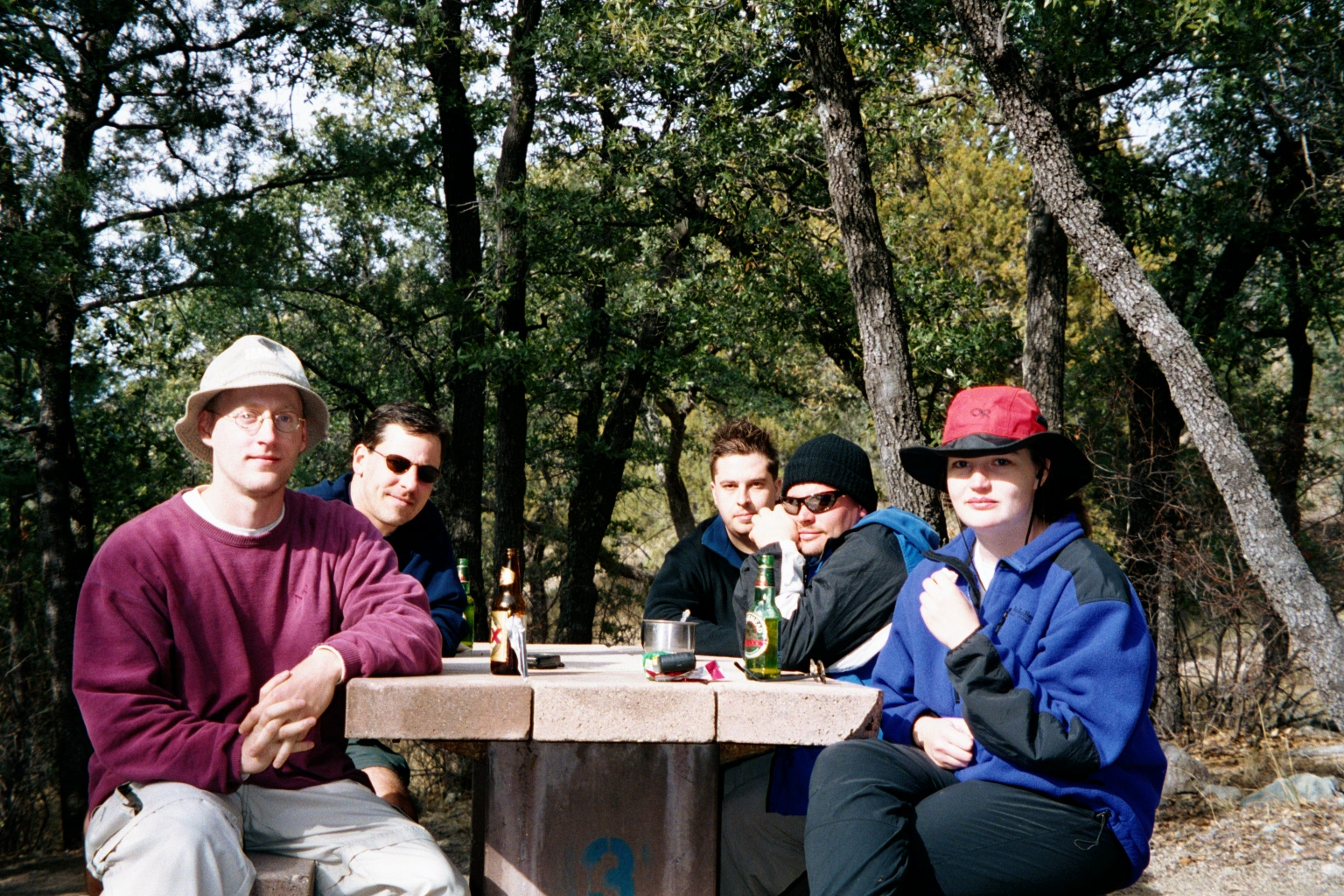
    For several hours we ended up stranded on the shore. The wind was blowing directly at the shore, and was kicking up a considerable amount of chop. The canoes were not designed to operate in such troubled waters, and we really didn’t see a viable way off. We had to pull them completely out of the water, just to keep them from being bashed repeatedly against the rocks.

    And so we waited.

    Doing nothing.

    And getting more grumpy by the minute.

    Finally, it was decided that the only way we were ever going to get home (the wind only seemed to be getting worse as we waited), was to physically carry the canoes and all the equipment from the shore we were stranded on, around the bend- to the opposite shore.

    It proved to be a difficult and frustrating task, but we banded together “buckled down” and got things done. I for one, was happy that we were at least doing SOMETHING, rather than just sitting on the shore and hoping that things would clear up.

    Eventually, we did get the gear and canoes to a safe (or at least safer) launching point and- after a dicey launch with the wind- were on our way. For this launch, Mark and Dan switched places again- as Mark was the more experienced sternsman. And we needed experience. Matt, of course, was steering our canoe, with me in the front. Everyone paddled furiously to get past a second point, and into calmer waters. There were a few moments where we had some fear of tipping over, but a combination of our sternsmen’s skill and a little luck saw us through.

    The rest of the canoeing, though sometimes tedious and exhausting, passed by with little more to tell. In fact, we finally made it all the way to the exit beach with only a single stop to stretch our legs and rest our arms.

    Believe me, there was much relief when we finally pulled up the canoes onto shore for what we knew was the last time. Some hauling brought them- and the gear- all the way up to the dirt parking lot, where one of our cars waited. A quick decision left Mark, Betty, and myself to watch over Betty’s parent’s boat and the gear, while Matt and Dan left to get the minivan. The rented canoe was left in a specified spot, which had been prearranged before we had started our trip.

    So, Mark, Betty and I settled down next to our pile of stuff under a tree and waited. Mark and I read, while Betty stretched out. And time passed.

    And clouds rolled in.

    And Mark went for a walk- declaring after the walk that he felt the storm would miss us.

    And big ugly clouds rolled in.

    And Mark and I took notice.

    And black and evil clouds rolled in.

    It was at this point that Mark and I realized that we were about to get peed on big time. So we woke up Betty and the three of us began to throw the tarp over the equipment and get our rain gear on. It was now clear why the wind had not died down while we were stranded on the rocky shore. This bad boy was blowing into town.

    Then it hit.

    The big storm came on us like a train, blasting us with wind, rain, and yuck. The three of us did all we could to try and keep the gear dry while wind and rain assaulted us.

    Then it was over, and we were left to inspect the parking lot. Shortly after, a ranger truck pulled up along the improved dirt road outside of the lot. It had parked next to a funny-shaped hill none of us had noticed before, and the ranger had gotten out. We went to investigate. You can chalk up what happened next, to us both being somewhat oblivious, and being rather lucky.

    The funny shaped “hill” was, in fact, the bottom of an newly uprooted tree’s base. It had fallen directly away from us, and the dirt covered roots were the hill we saw. Not so good. In addition, the tree had fallen across the road, blocking passage. Definitely not so good.

    Worse yet, another tree had punched through the windshield of a parked car. Definitely bad. Even worse news came soon after that. It appeared that the area was the victim of a microburst, which had blown down something like ten trees across the access roads, effectively cutting us off from the rest of the world until they were cleared. To make matters just that more fun, the mosquitoes were now back in force.

    Shortly after, Mark and Betty decided to go walking down the road. I chose to stay around our gear. While they were gone, I overheard a story or two from other campers and the ranger. Apparently a second group I had bumped into, had just gotten off of the water when the storm hit. One man told of seeing a whole series of canoes being blown into the air from the point where they had been beached. He and another person had been forced to physically hold their beached canoe to the ground, as it fought to levitate. They had managed to move it into the shelter of dense trees before anything else had happened to it.

    After a while, Mark and Betty returned from their walk. Shortly after, we heard the distant sound of a chainsaw. This was a happy sound, as it indicated that the road was steadily being cleared again. Eventually, we saw the fruits of the ranger’s labors, as they passed through our area, and cleared the trees off of the road. A caravan of cars followed them, all trying to exit the park. One vehicle was Matt’s car while another was the minivan. A truly welcome sight, let me tell you!

    Some quick packing, and we were off to the ranger station, to check out and buy a few souvenirs. I purchased a map of the area while we were there. Then we broke into two groups, with Mark, Dan and Betty in the minivan and Matt and I in his car. Our next stop: the hotel.

    And thank God for that. Matt and I talked for a while in the car, and noted some damage along the road, obviously from the storm that had just blown through. The trip to the hotel was uneventful, and we were soon checking into our room. Next came… The cleanup!

    One weeks worth of beard shaved off.

    Twenty minutes worth of scrubbing in the shower.

    Brushing the teeth and hair.

    Changing into clean clothes (left in the car for safe keeping while we went on the trip).

    And ordering pizza from Pizza Hut!

    Unfortunately, we were too late getting to the hotel, to buy beer. So we were forced to drink pop with the pizza. Not the full end-of-trip tradition, but satisfying none the less. That night, while laying on the floor (I opted for it, rather than sharing a bed, as it doesn’t bother me to be on the floor) I had the best rest I had experienced in a week. Nice, flat, carpeted floor. Oooohhh…

    The next morning, we got up, cleaned up, and headed out. While still in Canada, we stopped into two places. The first was a donut shop. The second was a liquor store. Canada has several forms of alcohol, which you really can’t get around here, so we grabbed a few cases before we crossed the border.

    And we were off!

    First came Minnesota. Satisfyingly calm. I was back in the minivan with Dan and Betty for the trip home. Duluth turned out to be far less impressive in the daylight. Basically an industrialized town with a harbor servicing cargo ships. It was MUCH prettier in the dark. My apologies to anyone who lives in that city… Perhaps we only saw the industrial portion of the town. Honestly, though, I just wanted to get through it and go home.

    Eventually, we crossed into Wisconsin. And as we did, we started to drive into one of the biggest heat waves Wisconsin and Illinois had experienced all Summer. An unwelcome surprise to everyone except Betty- who actually enjoys ninety-plus degree days. A feeling that this writer cannot understand.

    We stopped at a restaurant for some food and a chance to move around a bit. While we were there, we got a newspaper and started catching up on a few of the world’s events, which we had missed. The TV in the hotel the night before had given some news (such as the death of JFK Junior in a plane crash- he had just gone missing the day we had left for the trip) but not much of else. It was an okay meal, but I found myself anxious to continue.

    Which we did.

    And experienced the first problem.

    As we drove down the road, steadily closing the distance, there was a sudden BANG sound from the minivan. A rapid pulling to the side and stop revealed the cause: the minivan had blown a tire. Three hundred some odd miles out, and we had blown a tire. Well, after fumbling with a rusty jack for a while and being more than a little nervous about the trucks and cars blowing past us going seventy-five miles an hour (or faster), we managed to get the spare on.

    The tiny little spare. Which had to get us all the way back to Chicago.

    Or at least that’s what we hoped. Until the next problem arose: in the form of Matt’s battery light suddenly turning on twenty miles further down the road. We stopped, looked at it, and checked AAA for a local mechanic. Nothing was close, so we kept driving and praying nothing else would happen.

    Nothing else did- until we reached the lovely resort town of Wisconsin Dells (Cheese Vegas, I think we called it). That’s when Matt’s car started acting really poorly and it became obvious that we weren’t going to make it. Finally, though, a bit of luck was on our side. One of the only mechanics listed from AAA that was open on a Saturday night, was just outside of the Dells. So we limped, in the dark, through the town and to this shop.

    Picture a stereotypical small-town auto shop a ways away from the main strip (in the dark), and you will get the idea of what we saw. The mechanic took a look at Matt’s car, and found the problem: the alternator was failing.

    This was his second in six months.

    It was rapidly concluded that his car was not going to make it home. So, with much reservation, we came to a plan. We bought a used tire from the mechanic and put it on the minivan. Then we loaded all the important stuff into the minivan, got in… And left Matt’s car.

    He would be forced to take a train up (or drive, if he could find a willing friend to drive him) the following weekend and pick up his repaired vehicle. There was no alternative.

    So, the five of us, cramped inside of a minivan filled with camping gear, started off again for Chicago. Thankfully, the rest of the trip was quiet, and we finally managed to limp into town sometime after two in the morning. We quickly separated our gear, and went our own ways, relieved to finally be home.

    And so ended the trip. Overall, I am thrilled I went. It was beautiful, and totally unlike anything I had done before. The challenges we experienced in the woods tested us all, and I for one feel better for having done it. I had never done anything camping-related to this extent, but I will most definitely do it again.

    The whole broken cars scene can take a giant leap, though.

    I hope that you enjoyed this little diary of our adventures. Until the next trip:

    Live long, be happy, and enjoy life,

    – Dave Gummersall

  • Trip Journal: Mission MacKenzie (1997, Quetico Provincial Park, Ontario, Canada)

    Diaries: Mission MacKenzie – Quetico Provincial Park, Ontario, Canada

    I had met Matt Cassidy while going to school at Iowa State. He had told me about the camping trips to Canada that Horizons Unlimited had been going on and had invited me on a couple of the trips to Quetico. Unfortunately I couldn’t go on these first trips. Matt kept on asking and finally in 1997 I had both enough money and enough vacation time to venture forth into the wilds of Canada for some canoeing and camping.

    Loading up the car in Colorado, Matt and I started the trip by driving to Chicago to meet up with the rest of the campers that were going on the trip. The next morning in Chicago, after meeting all the rest of the intrepid adventurers, we had to do the final packing of all the gear, equipment and personal belongings for 9 people. This was quite a confusing sight; sleeping bags, clothes, tents, paddles, life vests, food, backpacks, ropes, and canteens spread out all over the place. Somehow, someway, this massive mound of stuff eventually got stuffed into 8 backpacks. With this done, we loaded up our 3 cars and started driving north. It would be a long trip, driving through the night, but we finally got to the border. I had the misfortune of driving one of the cars while attempting to cross over into Canada. The border guard asked me a few simple questions one of which was “where are you from”? I replied with “Colorado… err… Chicago”. Not very impressed with the confidence of my answer we were asked to pull our car off to the side so it could be searched. The border guards gave up after searching our gear for only 30 minutes; it’s a good thing, too, because it would have taken them hours to complete a thorough search. So we were off again, now getting very near our goal. The terrain had changed quite a bit from what I was used to in the U.S.; Everything is either an evergreen forest or a lake and the ground is very rocky. At 8:00 in the morning we got to the outfitting shop near the edge of Quetico Park. The owner of the shop is a very unusual fellow named Doug. He was very talkative and friendly with quite a few interesting stories to tell. Doug rented us our canoes then we drove to the ranger station at the edge of the park, thus starting our next leg of the journey.

    At the ranger station we all hung out for a while. It was a little bit chilly with a constant light rain and I believe a few people weren’t feeling very well. I got to use the bathroom, which didn’t seem like a big deal at the time; but later, after a week in the wilderness, I would gain a newfound appreciation for one of the true wonders of the civilized world: indoor plumbing. The weather was starting to let up a little bit and people were feeling better so we loaded up the canoes and put into the water. These were the people that were there for our camping adventure:

    Matt Cassidy (Advisor)
    James Janega (Advisor)
    Dan Hooker (Advisor)
    Greg Frankfurter (Advisor)
    Mark Zeutzius
    Jess Janega
    Sarah Janega
    Laura Brady
    R. F. Keefe

    These 9 people were in 3 canoes along with quite a lot of gear, so the canoes were sitting pretty low in the water. About half the people had very little or no experience paddling a canoe (including myself) so Matt, James, Dan, Greg, and R. F. had to give the rest of us a crash course in paddling. We started across French Lake, which was relatively small and headed for Baptism Creek. Baptism Creek was a nice, slow current, meandering creek and it was a nice way to start the trip with some easy paddling. The scenery was great with tall green grasses by the shore of the creek and with trees beyond. It was still drizzling and it was a little chilly, but now it didn’t matter because we were keeping warm through our efforts to propel the canoes upstream. The creek continued with many turns and switchbacks. We started to encounter branches and side channels in the creek, but Matt and James had been this way before so they knew which way to go. We finally came to a split in the creek where we could go left or right; both branches of the creek looked to be equal in size and neither Matt nor James could not remember for sure which way to go. We chose the right branch and continued on. Now the stream started to change a little bit; it became narrower, shallower and there was more debris in the channel. The creek gradually became more and more difficult to navigate; eventually we had to get out of the canoes and walk in the stream pulling the canoes behind us. It was about this time that I started to get quite nervous. I believe that I have neglected to mention that I had never been camping before in my life. Now I started to realize that if you get lost in the wilderness you are in real big trouble and I was beginning to think that we were lost. Everybody else seemed to be thinking the same thing and Matt said that if we didn’t find the portage soon that we would have to turn around and go back. Thus, just as we were starting to despair, we found the first portage.

    We had to do 4 portages to get from Baptism Creek to Baptism Lake and portages turned out to be much more difficult than I thought. The packs were heavy and it is quite awkward for one person to carry a canoe. During these portages we did find a beautiful spot; a pretty big waterfall with a small clearing in the woods. We took a break by the waterfall listening to the rushing water and we took a few pictures of the group. The rest of the day went pretty well. We crossed Baptism Lake, did a portage to Trousers Lake and then started looking for a campsite because it was getting late in the day. We did find a great place to camp. On the south end of Trousers Lake there was a medium sized island that was in the shape of a dumbbell. It had enough space for all of us and because it was an island there weren’t very many bugs. We set up camp, Greg and Dan cooking supper for us. I didn’t realize how hungry I was until there was food to eat. I wolfed down my portion in an instant. Food tastes twice as good when you earn it by working hard all day. Many thanks to the camp chefs, Greg and Dan. Later in the night it started to get colder so we wanted to make a fire. Even though it had been raining all day, Quetico had been quite dry recently so there was a fire ban. We had to make due without a fire, which was a bummer. R.F. decided to sleep outside that first night; everyone else slept in the tents.

    The next day we stayed at our campsite and relaxed all day long; each person doing his or her own thing. We were all getting to know each other pretty well (that is I was getting to know everyone, everybody else was already acquainted). A few people read paperbacks that they had brought along with them. I read a book about the Caesars of the Roman Empire and found out that Jess was very interested in ancient Rome. Greg and Dan were both big movie buffs. Greg was also a good photographer. James was a journalist and was thinking of moving to the Quad Cities to get a job at one of the TV stations there. There was also a group meeting to try to decide where we should go and what we should do for the rest of the trip. The original plan was to get to Lake MacKenzie but there was some doubt as to if we could get there on time or if it was even worth the effort. We finally came to a compromise; some would stay at our camp on Trousers Lake and the others would push on to MacKenzie. R.F., Greg, and Dan decided to stay behind while Matt, James, Sarah, Laura, Jess, and myself decided to push on to Lake MacKenzie. At that time I thought that R.F., Greg, and Dan were being quite boring by staying behind; it turns out that they were the smart ones. We all stayed up late that night because the sky was clear and we were hoping to see the northern lights. No luck seeing the northern lights but the stars were clearer that night than I had ever seen. The Milky Way was clearly visible and you could see satellites pass overhead.

    The next morning it started to rain again, not hard, but consistent. We loaded up our canoes and set off for Lake MacKenzie leaving R.F, Dan, and Greg behind. We crossed the rest of Lake Trousers and found the first portage. We set up a system where the ladies would carry the packs (which were much lighter now because we left a lot of things behind) and 2 of the 3 guys would carry the canoes leaving one person not carrying anything. Whenever someone carrying a canoe would get tired we would rotate the fresh guy in and let the tired guy rest. This portage was to be 2.5 miles, which didn’t sound like it would be very difficult but things soon changed for the worse. The trail started out wide and smooth and dry, but as we continued on things started to deteriorate. The trail started to get less like a trail; it was overgrown. The bugs started to come out in force (mosquitoes and flies). The worst, though, was the mud. At first there was no mud, but due to the large amount of rain that the area had received the last couple of days the trail soon turned into a slurpy pit of muddy muck. This mud gradually got deeper and deeper until we were walking in mud that averaged a depth of one foot. This mud was making it’s best attempt to suck the boots off of our feet, making suction type sounds every time you lifted your foot out of it. The mud, the rain, the bugs; why are we doing this again? Oh, yeah, to make it to MacKenzie. We finally made it through the portage and arrived at Cache Lake. We paddled across Cache refilling our canteens along the way. Next we started the Cache to MacKenzie portage. We were all already tired, dirty, and cold by this time and we had to start a portage that was close to twice as long as the one we just did. This portage ended up being just like the last one; mud, mud, more mud and bugs. I think everyone started to get demoralized as we started running out or our reserves of energy and good will. That is, except James who seemed to have bountiful supplies of energy and seemed to be able to carry a canoe indefinitely. Some time during this portage the term quick-mud was coined. Quick-mud was mud that you would sink in up to your waist when you stepped in it. I happened onto some of this while carrying a canoe. I fell in the mud up to my waist with a canoe over my head; it looked like the whole world had just been letterboxed. Sarah had an encounter with quick-mud also and had to be pulled out. We were all getting so tired that we were starting to stumble and trip a lot. Just when I thought I couldn’t take it any longer there we were at the end!!!

    Water again and an end to the mud. This lake wasn’t yet MacKenzie, it was a small one (Lindsay) that we crossed and started to look for the final short portage to our goal. We couldn’t find the portage; it all looked like wilderness with no trails. Then we received guidance from Matt’s animal totem: the eagle. A very large majestic bald eagle came gliding down and landed on a tall dead pine tree. It turned out that where this eagle landed was the beginning of the portage. We crossed this last short portage and saw Lake MacKenzie for the first time. I almost forgot to mention that Matt had tried to reach Lake MacKenzie a few times in the past and it had seemed like the gods were conspiring against him to prevent him from reaching his destination. At this time Matt decided to celebrate his victory of reaching MacKenzie by uttering a curse at the gods. The gods promptly struck back at Matt by causing him to slip on a rock and fall into the lake. By this time we were all totally spent, dirty, and wet. None of us really felt like pushing on any farther but we had to find a camping spot as it was getting late. We started paddling across Lake MacKenzie. James guided us to an island on the North end of the lake where there was a great campsite; the people that had been there before us had even left firewood. We quickly set up camp and (fireban or no fireban) James built a nice roaring fire. This fire was a savior. We all stripped out of our dirty wet clothes and warmed ourselves by the fire. It was starting to get dark and as we stood by the fire getting warmer our spirits started to revive quite a bit. We had a meal that didn’t require much cooking and told campfire stories for a brief amount of time until we all hit the sack for the evening.

    The next morning was wonderful. The weather was warm and dry. The sky just had a few light fluffy clouds. There was no wind and the water was as smooth as glass. This is what I came to Canada for! We were in total wilderness with nobody but us for miles around. The surroundings were so pristine that I could imagine myself as the first human to ever see it. I was glad of the effort spent the day before to see it and I felt as one with nature (almost a religious experience). We started the day by canoeing south in Lake MacKenzie. We were looking for some pictographs that were made by the Ojibway Indians. We found them on a cliff face and viewed them from the water in our canoes. The pictographs were of a canoe with people in it, an eagle symbol and a few other symbols that we didn’t know the meaning of. We then turned around and started heading back towards the base camp we left on Lake Trousers. We again had trouble finding the portage but once we found it the going was a little easier than the day before. The warm weather and lack of rain had firmed up the mud just a little bit. The portages were still very difficult but not nearly as demoralizing as when we traversed them the day before. After a long day of portaging our gear we finally got back to Lake Trousers and saw R.F. practicing his martial arts as we approached. We spent the rest of the night recuperating from our ordeals and telling Greg, Dan, and R.F of our adventures. The ladies decided to take a bath to wash off the accumulation of mud, dirt, and sweat that they were coated with. So the guys went over to one side of the island to give the girls some privacy. So Sarah, Laura, and Jess proceeded to take a bath in Lake Trousers. The guys could all hear them say ‘Wow, this is refreshing’ as they entered the water. A short while later we also heard them utter the infamous words:

    “Is that a leech? … IS THAT A LEECH!?”

    Followed by the splashing sounds of 3 people rapidly trying to exit the water. A short while later Jess was scolding all the guys for not coming over to help them despite the fact that she was naked. We spent the rest of the evening giving each other massages to ease our sore muscles.

    Only two days left on the trip. It was decided to go half way out today so our last day would be a short one. We pack up camp and head towards Baptism Lake. This is when I try to stern a canoe for the first time. It was quite an ugly sight with the path of my canoe randomly zigzagging all over the place. Fearing a navigational disaster, Greg quickly relieves me. We find a campsite on Baptism Lake and only set up half of the camp so we don’t have as much to pack on our last day. We spend the night whittling wood and reading short stories from a sci-fi book that I had brought along. For sleeping arrangements we try something different, we make a shelter out of the tarp and sleep under that instead of setting up the tents. It turned out to be not such a good idea because it rained that night and the mosquitoes were swarming.

    The last day we pass from Baptism Lake to Baptism Creek to French Lake and exit the park. By this time we are all old pros at paddling the canoes and the trip out proves uneventful. We got two rooms at a hotel in Thunder Bay for the night, eating pizza, drinking beer, and taking showers. It feels good to take a shower after such a long time without one and the toilet is a handy invention, too. For the rest of civilization, I didn’t miss it while I was gone, but it is nice to be back. All in all I really enjoyed my first ever camping trip that took me into the true wilderness of Quetico Provincial Park in Canada. I also really enjoyed getting to know Matt, James, Dan, Greg, Jess, Sarah, Laura, and R.F. on the trip and I hope to see them all again sometime, possibly on a future trip.

  • Trip Journal: La Ventra (1995, Weminuche Wilderness, Colorado)

    Diaries: La Ventra – Weminuche Wilderness, Rio Grande NF, CO

    Participants

    Matt Cassidy (Advisor)
    Dan Hooker (Advisor)
    Jessica Janega
    Kyle Nelson
    Judd Vincent

    Monday, August 7

    At 5:00 p.m. Jess, Dan, and Judd left Wilmette in Dan’s 1993 Subaru Legacy Wagon. After getting some trail mix and other supplies we got on the Tri-State 294 at 6:30 p.m. From there we got on I-80 and then on I-35 to Ames to pick up Matt and Kyle at Iowa State University. At about 12:30 a.m., we left for Colorado.

    Tuesday, August 8

    We DROVE, that was basically it for today’s activity. All five of us in Dan’s Subaru with the luggage turtle on top. As I drove the car through the never-ending state of Nebraska, at about 4:00am I was able to sum up the situation by insightfully saying, “Nebraska…..this place sucks.” We drove all day on I-80 and then on I-76 as we crossed the Colorado border to get to Denver. In Denver we picked up I-25 and drove through Colorado Springs and Pueblo, and at Walsenburg, Colorado, we got on US-160 and drove through Alamosa, Monte Vista, and several towns that looked like they were from the set of an old Western movie. One exciting point in the drive was when we drove through the Wolf Creek Pass on US-160 on the continental divide. The pass was 10,850 feet above sea level and was on a 7% grade. Both the car and its occupants were feeling the high altitude and thin air. By the time we reached the top of the pass the car was nearly out of gas so I coasted it down the other side of the pass for nine miles and then drove to a gas station. We then found a tiny little town with a hardware store and we picked up some last-minute supplies and then found a Super 8 Motel that was built like a large, tacky log cabin and stayed there for the night. I think that town was Pagosa Springs, CO. We had dinner at Pizza Hut and then, after packing the backpacks and sorting through the supplies, we watched “True Lies” on HBO and went to sleep.

    Wednesday, August 9

    The day started at 6:30 a.m. with a wake-up call from the front desk. We quickly left and got on the road. We went back up through the Wolf Creek Pass and up to South Fork, CO, where we got on CO-149 to drive to the tiny town of Creede, where the National Forest Service office was located. There we got some last-minute information. We then continued to drive along CO-149, which snaked its way through the mountains and followed the Rio Grande River. The river was dotted with log cabins, which were apparently vacation homes where people went to fly fish on the Rio Grande. Some of the cabins were large and quite beautiful. The mountains were mostly covered with dense evergreens but some rocky ledges, cliffs, and outcroppings were also visible. We turned off the road onto a small dirt road, which we rode for about fifteen miles until we reached Thirty Mile Camping Area located on the Rio Grande Reservoir in the Rio Grande National Forest.

    After filling our canteens, we entered the Weminuche Trail at 9:30 a.m. at about 8,500 feet above sea level. From the moment we stepped onto the trail it was mostly an uphill hike. The trail ran along the reservoir and then entered into the mountains and across huge glacier-cut meadows. The meadows were expansive and had a stream twisting through the center. The ground was covered with rocks, long grass, and flowers and dotted by pines. In the large meadow we encountered a band of Mexican-American laborers doing ditch work using horses and mules. At the edge of that meadow we got onto the Pine River Trail and then onto the Rincon La Vaca Trail. After hiding out in the woods from a storm at about 3:00 p.m., we found a small valley with a stream running down one side and a campsite in the trees on the opposite side with a ring of rocks already established as a fire pit. We decided that this would be our base camp. We were now at 10,200 feet above sea level and we had hiked approximately 8.5 miles, a pretty good first-day hike. Soon we all felt the affects of the high altitude and thin air, especially Matt, who had to lay down for a while and groan like an injured animal. From the base camp in the valley we could clearly see the bald rocky peak of the Rio Grande Pyramid and the rock formation called “La Ventra” (“The Window”) to the west. Matt explained that he had read about the legend behind The Window, and it stated that during certain times of the year the sun would set in The Window and cast a red light throughout the valley in which we were camping. Spanish sheepherders at one time thought that this was a sign of the presence of the devil.

    Upon arrival we quickly pitched Matt’s tent and my tent. We used my smaller tent as a gear tent and we used Matt’s larger tent as a sleeping tent for the five of us. Dan and I then set out to collect wood so that we could build a fire and, while looking for dry grass, I found part of the jaw bone of an elk that had been gnawed on by some other animal. The campsite had been fairly well used so I dug the large pile of ashes out of the fire pit and spread them uphill form the campsite all over the woods. After a brief storm and witnessing a spectacular double rainbow, Dan and I were able to get a roaring fire going and a hot bed of coals, which was perfect for cooking our spaghetti dinner. After dinner, Kyle volunteered to clean the dishes and then Dan, Kyle, and I sat by the fire while Matt and Jess went to sit on a couch-shaped rock in the meadow which we later cleverly named “Couch Rock.” Dan and I smoked our pipes as Kyle looked on with a fascinated, almost psychokilleresque stare. Dan and I smoked faster. Then I almost passed out. It was pretty cool.

    Later in the evening, at about 11:00 p.m., a man on a horse wearing a duster coat and a cowboy hat and leading another horse came down from the mountains and was coming down through the valley in the light of the full moon. We had waved to him earlier in the evening when he passed by on his way up into the mountains. We went out to greet him and discovered that he was a ranger and he was searching for a church group from Texas that was supposedly going up to The Window. He needed to find a member of the group to tell him that his father-in-law had passed away, and he told us that if we encountered him on our hike the next day to give him the message. After talking to the ranger, we gazed at the star-filled sky for awhile before going to sleep.

    Thursday, August 10

    Today started for me at 6:30 a.m. and now at 8:00 a.m. I am still the only one awake. I got up early because I was cold and I decided that I would start up the fire again to warm up. The air temperature was about 40 degrees. It had rained earlier that morning so unfortunately the embers from last night’s fire were few and weak, and the dry grass around the site was wet. I continued to look around for anything dry and discovered that under some of the pine trees there were piles of dried elk dung, which were untouched by the rain because they had been sheltered by the pine trees. The dung consisted of golfball-sized nuggets that resembled balls of dried grass, so I used them to start the fire again and get warm.

    It was a gray and damp morning, but I was able to see another double rainbow and it was even brighter than the one we saw the day before. Also this morning I saw four mules wearing bridles running up the valley towards the mountains, but there were no men with them. Thirty minutes later I saw a man on a horse and two dogs running up the valley at full sprint, followed by two Mexican-Americans running about 300 yards behind the horseman. Fifteen minutes later the horseman, dogs, mules, and the Mexican-Americans-now riding the mules bareback- came back down the valley. At that time of the morning I found the chain of events to be pretty amusing.

    The rest of the crew got up at 8:30 a.m. and, after a breakfast of Nutri-Grain Bars and oatmeal, we decided to hike up the Rincon La Vaca Trail into the mountains and up towards the Rio Grande Pyramid. We backed up my pack with a trail lunch, everyone’s rain gear, a couple of jackets, cameras, and five quarts of water. Dan, Matt, and I took fanny packs as well. We got a late start (10:45 a.m.), and we switched off carrying the pack. We got up to a high ridge at about 12,000 feet but could go no further because of threatening storms and fatigue setting in for a couple of us. On the trail up, which was quite steep, we encountered many beautiful sights, including a small spring lake that was completely devoid of both animal and plant life. The water was as clear as the mountain air, and there was not a single ripple-just like glass. The bottom was bright white, silty, and completely smooth, though the banks were slightly sandy. The middle appeared to be only three feet deep and Jess, Kyle, and Matt thought it looked inviting for a little dip. However, Dan then picked up a fist-sized rock and threw it in the middle of the lake and, after making a few ripples in the water, the rock hit bottom and quickly disappeared in the very unstable white silt. It was probably an alkaline spring and it probably would have been a bad idea to swim in it.

    Another interesting stop was made at a patch of snow on the side of a rocky ridge, where we enjoyed the novelty of a snowball fight in August. Also along the trail we crossed numerous streams and rock slides. Once we reached the top of the ridge in the high-mountain tundra, we ate a quick lunch before heading back down at about 2:30 p.m. to avoid an approaching storm. Our view was fantastic and limitless, and we could see the valley down below where we had set up our base camp. After hiking through rain we arrived back at camp at around 4:00 p.m.. We had hiked about 10 miles total that day.

    Upon returning back to camp I cooked white rice and baked beans for dinner, and it was quickly devoured by everyone, even though it probably tasted lousy. Right now it is 7:30 p.m. and I am sitting next to the fire after finishing washing the dishes. Dan and Kyle are reading books, and Jess is giving Matt a back rub.

    Later that evening, we discussed what we would do the next day. Kyle and I were determined to climb to the peak of the Rio Grande Pyramid, 13,821 feet above sea level (ASL). Matt and Jess decided to hike up to The Window, which also was supposed to have great views and is at about 12,500 feet ASL. Dan decided that he was tired and that he wanted to just stay at the base camp and take care of things and read his book. Matt, Jess, Kyle, and I decided that we would get up the next morning at 7:00 so that we would have enough time to hike before the afternoon storms. Since the four of us would be hiking the same trail on most of our journey, we would leave together, but Kyle and I would possibly break off and go at a faster pace.

    That evening we sat out near the campsite on Couch Rock. I jokingly called it “Freud’s Couch Rock” due to some of the “serious conversations” that took place there. That night we sat on the couch facing east and watched the stars through the light of the full moon and got eaten by mosquitos before going to bed early.

    Friday, August 11

    This morning Matt, Jess, Kyle, and I got up at 7:00 a.m. as we had planned and, at 8:00 a.m., we started hiking up the valley to the mountains. By the time Kyle and I had reached the end of the valley to enter the woods, Jess and Matt had fallen behind and by the time we entered the woods they were out of sight. Kyle and I each had a quart canteen and I had a fanny pack, which contained my rain gear, knife, potable aqua tablets, signal mirror, camera, sunglasses, and a couple of other small items, while Kyle carried the first-aid kit and his rain gear.

    We hiked fast and within 1 1/2 hours we had reached the point where we had stopped the day before. The sky was clear and the sun was bright and warm. On the trail we met four men on horseback with three-pack llamas and we asked the leader where the Divide Trail was located. He told us a location that was very different from our map and found that the Divide Trail would not help us reach the base of the Pyramid, which was almost looming over us in our present position but still appeared unapproachable. We trusted the man’s word because he had just come from the Divide Trail and we asked where he thought we should approach the peak. Afer a long, thoughtful pause he looked around and pointed to a ridge and said, “You could try over there.” I then asked him if he had ever been up the Pyramid and he replied, “No.” He was a tremendous help.

    The peak itself was mostly unpassible because it was protected by rocky cliffs that were several hundreds of feet in height. At the base of the peak there were two ridges-a shorter one on the west side and a steeper, taller one on the east side and a large expanse of snow in between. We decided we would try to climb the west ridge and then cross over to the east ridge and try to climb that to reach the base of the peak. So we set out across a wet boggy flowery meadow to the rocky west ridge and started to climb. After climbing up over one hundred feet I accidentally grabbed onto a loose rock, which began to move. Luckily, as we had planned, Kyle was not behind me but about fifteen feet lateral from me. I quickly realized that we may be in trouble as I was loosing my balance. The large rock rolled out of its position and struck a few other rocks that also began to move. This set numerous other large rocks into motion and this quickly developed into a small rock slide. The rocks under my feet were also loosening and I scrambled to find rocks that would support me and not move. I basically clawed at the rocks with my hands to keep from falling back and being crushed by the big rocks. Kyle was also trying to steady his position. Finally I grabbed a boulder that was stable and got a foothold as well. The rocks continued to rumble down the slope, carrying other rocks with them along the way and, most noticeably, one round boulder that probably weighed about a ton. My heart was racing as I looked across to Kyle, whose eyes were as big as saucers. With the tiny bit of breath I could muster I could barely gasp out, “Shit.”

    We climbed our way up the rest of the ridge with extreme caution and approached the patch of snow, which measured approximately 50 feet wide and 250 feet long. While standing next to the edge of it we could hear running water underneath it and this made us nervous because the icy snow was most definitely rotten and unstable, but it was the only way to cross without going all the way back down to where we started. We found a place to cross where there were some boulders poking through the ice, and we simply ran across the icy snow from one boulder to the other until we had safely crossed the snow. We found the snow to be more densely packed and stronger than we had anticipated. In front of the cliffs were strange formations created by erosion that looked like something out of a Road Runner cartoon. The formations were simply columns of mineral dirt, rocks, and debris that were about twenty to thirty feet tall with straight vertical sides, and at the top of each column was a huge boulder. Our immediate surroundings made us feel like we were on the surface of Mars, or some other place not of this world.

    We made our way to the other ridge and were faced with an almost 2,000 foot climb up a very steep rocky slope with no end in sight. It seemed impossible but we were determined. Carefully we climbed and climbed and we found that breathing became harder and harder. The sun was beating down on us relentlessly as the temperature rose. If we fell backwards there was no way of telling where we would land but it was certain that we would land on large sharp rocks. We proceeded carefully.

    About 75 feet from the top, I thought my heart and lungs were going to implode and the slope seemed as endless as ever. Matt’s altimeter watch, which I had borrowed for the climb, read 12,900 feet, which meant that we had another 1,000 feet to go! It was then that a couple of climbers passed us by on their way down from the peak, and one of the men said, “You’re almost there!” With a confused look on my face I asked, “How far?” He replied, “Within spitting distance, about 50 to 75 feet.” After a brief conversation, he noticed the altimeter watch and asked me what it read; I told him and we both understood that it was way off. I asked how they planned to get back down, and he said, “Well, I’m still working on that part.” He then continued down and I had a burst of adrenaline that sent me at a quick pace right up to the top, and I yelled to Kyle that we had made it-13,821 feet-it was the highest either of us had ever climbed.

    It was now 12:30 in the afternoon and the sky was bright and clear for the most part. The view was breathtaking. We could see for what seemed like hundreds of miles in every direction and we could even see the valley and the tiny place in the trees where our campsite was some 6 miles away and 3,500 feet down. All of the peaks around us looked just like enormous rocks with snowy patches on them. Besides me and Kyle there was also a young couple from Santa Fe with two dogs (how they got the dogs up there I will never know). They took a picture of me and Kyle with my camera, and I returned the favor by doing the same with their camera. At the very top of the rock peak we found a large rock with a 5-inch diameter round bronze seal embedded into it. The seal, from the U.S. Geological Survey, stated the elevation and that removal of the seal would result in a $250 fine. Kyle then spotted two white dots down in the meadow below headed for The Window, and we remembered that Matt and Jess were wearing white shirts. I took my signal mirror out from my pack and signaled them, and we later found out after returning to camp that they had seen the signal. Kyle and I sat on the north edge of the peak, which had an over 1,000-foot vertical drop, and ate a couple of Kudos bars while perched in this dangerous and precarious position.

    At that altitude we were also able to see cloud patterns and weather changes, and we paid special attention to a huge thunderstorm to the south. We soon discovered that it was growing in intensity and was headed in our direction. At 1:00 p.m. we decided to end our short visit to the summit and climb back down to avoid the possibility of becoming lightning rods. Climbing back down was every bit as treacherous as getting up there. We were very careful but we made good time, especially on our descent down the edge of the east ridge, which in one part consisted of very small pebbles, and we were able to basically slide down as if it were a sand dune. We climbed down a dried-up stream bed and made our way back down and across the flowery meadow at a very fast pace. We made it all the way back to base camp by about 3:30 p.m., right after Matt and Jess returned to camp. After performing some first aid on my feet I decided that tomorrow I would take it easy. Today Kyle and I had hiked more than 12 miles, and I discovered that my hiking boots were not really suitable for the kind of climbing we were doing. Dan cooked a spaghetti dinner with red sauce, and we smoked our pipes in the rain before turning in for the night.

    Saturday, August 12

    Today I awoke at 7:00 a.m. and restarted the fire again using elk dung. Being the only one up on this sunny morning, I was able to witness a fair amount of campsite wildlife activity, including squirrels, chipmunks, large gray jay birds, and hummingbirds. It is now 9:00 a.m. Jess just emerged from the tent, and I can hear that the others are not far behind. Time to start the day.

    Today has simply been a day of just sitting around, which is fine with me considering the shape my feet are in. I took off my socks earlier and found that the blistered part of my left shin that I did not cover the day before scabbed to my sock, which made taking off that sock a real treat. Early afternoon was quite stormy, and it would normally be during this time that we would be hiking (glad we weren’t hiking today). Most of our day was spent sitting around the campfire and talking while swatting mosquitos and blackflies. The rain today has been like the rain we have been typically getting the whole trip-a very heavy mist that penetrates everything. Fortunately our campsite is densely surrounded by thick pines, so we have had a bit of a barrier to the cold mountain mist. Tonight we had macaroni and cheese for dinner. Unfortunately the low-grade pasta and imitation cheese product took on a life of its own during the cooking process. We managed to create a thick gooey paste that eventually settled into a single solid loaf of starchy orange stuff. Kyle referred to this meal as “Cheese Rock.” Like the lackluster meals preceding this one on this trip, we ate our last dinner in the great outdoors. Tomorrow we pack up and hike the 8.5 miles back out to the car and leave this beautiful place.

    Sunday, August 13

    Last night was very stormy and wet, which made packing up our gear a bit difficult. The temperature had also dropped significantly, and there was a light frost on the grass in the valley. We dried the rain flies of the tents out in the sun in the valley on large rocks. The pine we had used to fuel our fires was heavily saturated with sap and pitch and, by the end of our trip, our cooking pot and hot water kettle had become encrusted with a thick layer of black tar. After collecting the non-burnable garbage generated by us and previous users of the campsite and packing it all up, we hit the trail at about 9:30 a.m.. The weather conditions were great-beautiful sunny skies.

    We hiked back down through the valley where our campsite was located, down through the vast meadow, over some streams, down some mountainsides, and through the woods back to the Rio Grande Reservoir. On the way down I found a horseshoe laying on the trail so I picked it up and kept it as a lucky souvenir. We arrived back at the car at about 12:30 p.m., and we were happy to find that the car was in perfect, though dirty, condition. I shed my boots for my Teva sandals and changed into shorts, and soon we had packed the car and we were back on the road. With the car stereo on and the windows open we drove back up the dirt road and onto CO-149, which twisted and turned along the Rio Grande. We did, however, make a quick stop at a grocery store in Creede so that we could buy soap, shampoo, soda, and the junk food that we missed so much while out in the forest.

    At first we planned to stay in a hotel in Alamosa but upon arriving there we did not find many accommodations. So we kept driving through the flatlands and past enormous cattle ranches. An interesting feature to mention about these ranches is that the barns behind the houses were not anything like the large wooden barns I have become accustomed to seeing out in the Midwest. Railroad boxcars were painted red and parked out behind the houses to be used as barns. Boxcars probably stood up to the weather elements much better than large flimsy wooden structures.

    Eventually we drove to Pueblo, CO, and we decided to stay there for the night. We found a Best Western and, as usual, we told the front desk that we only had three people. We got a nice room with two double beds on the ground floor, and we proceeded to clean ourselves up. What a great feeling it was to be clean again; we felt as if we were civilized human beings once again (or as close to civilized human beings as we could be). We found a pizza place on Santa Fe Blvd. where we could stuff our faces-it was called the “Do Drop In,” a disgustingly cute name. Our pizza was excellent, and Matt, Kyle, and I downed a couple of pitchers of Bud Light. On the way back to the motel, we picked up a twelve-pack of Natural Light. Upon returning to the motel at 10:30 p.m., all of us except Jess decided to go swimming. The small pool was closed and the lights were off, but it was outside and there was no fence around it so we jumped in anyway. In our semi-drunken state we were quite loud and obnoxious, but we really did not care. We also took turns trying to grab the branches of a tree hanging over the pool so that we could swing like Tarzan. After going back to the room, I discovered that I lost my key to the room so I went back to look for it on the pool deck and I noticed something at the bottom of the deep end of the pool-it was the key. After having just dried off, I dove in and got the key. After drying off again I joined the others in the room, where we watched TV while drinking more Natural Light before going to sleep.

    Monday, August 14

    After sleeping late, we left the motel at 11:00 a.m.. Dan drove first, and I slept in the back seat. Then at about 2:45 p.m. near the town of Brush, CO, he turned the keys over to me, and I now had the exciting task of driving through Nebraska once again. We stopped for a late dinner at a Perkins in Kearney, NE, and then, after twelve hours of driving, I drove into the driveway of Matt’s apartment in Ames, IA.

    Tuesday, August 15

    Dan had slept for a while, so he took the wheel at 4:00 a.m. and we drove down US-30 to join I-80 at the Iowa/Illinois border. At one point in Iowa I was awakened by a jolt against my seatbelt and looked out the front windshield to see two huge deer standing right in the middle of the road-Dan had stopped just two feet short of them. If we had hit them the car would have been totaled. They just stood there, so Dan honked his horn. One jumped off to the side of the road, and the other went the other way, practically leaping over the hood of the car.

    As Dan continued driving we got into a huge storm. The storm turned the early morning sky completely black, and at the edge of the darkness was an ominous roller cloud. Driving through the storm was like trying to drive through a swimming pool. At about 7:00 a.m., however, Dan started to fall asleep at the wheel so after minimal sleep I got back at the wheel while Jess and Dan slept. The storm was producing huge amounts of lightning and rain, and I was afraid a gust of wind would throw the car off the wet road and into a corn field. At one point I stopped under an overpass that did not already have two or three cars hiding underneath it. I eventually started up again and drove at 40 miles per hour with the hazard lights on. Eventually, on I-80, the rain let up, and I realized that we were near the leading edge of the storm again, so I floored the accelerator and we burst through the front of the storm at 90 miles per hour. We hit the Tri-State 294 just in time for Chicago rush-hour traffic and, at about 10:00 a.m., we arrived back at Dan’s house with the car and its occupants tired but intact. We got through another adventure and lived to tell about it. Mission accomplished.

    – Yukon, 8/18/95

  • Trip Journal: First Expedition (1992, Quetico Provincial Park, Ontario, Canada)

    Diaries: The First Expedition – Quetico Provincial Park, Ontario, Canada

    The first attempts at anything always seem to be a tottering balance of strengths and weaknesses. Our first foray into the North Woods together certainly bore that out.

    The weaknesses column seems, in writing, to overshadow the strengths. To begin with, we were young, all of us barely in college, with all of the attendant maturity issues inherent there. Added to that, we didn’t know the area. While comparatively forgiving territory like that found in Quetico Provincial Park, Ontario, and the Boundary Waters Canoe Area Wilderness, Minnesota, wasn’t likely to kill or injure us, it did hamper our progress, creating a wide rift between what we could do and what we though we could do. In addition to THAT were a series of poor judgments, miscalculations and blunders that would take years to shake out. But every single moment of that was fun, and I think that will come through as you read these trip diaries.

    “Fun” was our first (and maybe our last) strength. Everything that happened on that first trip was fun. In addition, we had accidentally pulled together a group of people (see ADVISORS) that were knowledgeable about a variety of North Woods camping aspects. That happy accident allowed us to overcome the aforementioned series of poor judgments, miscalculations and blunders. And have more fun. Finally, we were lucky, then and now. Maybe that was the greatest legacy of our youth. Which is rapidly approaching middle age.

    James Janega
    February, 1999

    May 17, 1992 – Wilmette, Illinois

    Two groups of people, one comprised of Chicago suburbanites, the other made up of college students from Iowa, hunkered down in couches across from each other. Our put-in point was already set: French Lake, on Quetico’s far northeast corner. Final decisions were being made on routes and menus.

    It was talking about food that got everyone opened up, although it was standing around a table spread out with multi-colored contour maps that generated the most interest.

    Individual personalities were beginning to meld into a group dynamic that would carry us through several trips together in coming years. Matt Cassidy’s voice carried a lot of sway: we were in his parents’ basement, we were pouring over his maps, and were getting advice from his father, who had been there-done that in a way none of us came close to. Matt had been to parts of Quetico since he was nine- or ten-years-old, and those of us who had camped in the North Woods listened to him carefully for advice on how to camp out of a canoe. Second to Matt was Don McGady, who had guided trips for a Boundary Waters outfitter in the Lac La Croix area. Don’s questions were always pointed: what was the country like? How clean was the water? How often were the portages used? James Janega rounded things out by suggesting how much equipment and provisions to bring, as well as began planning how to stow the gear for load-out in Wilmette and put-in at French Lake.

    They were not the most interesting people in the room. The two women in the group, Missy Hills and Jody McGady, sister of Don, brought necessary personality and self-effacing humor to this trip. Whenever Matt, Don or James seemed to be taking something for granted, Missy or Jody would magically ask the perfect question to deflate an offending ego. Their sense of humor also kept things on keel when they got tough later.

    The only missing party at that group planning session was Jason Hagedorn, a student at the University of Iowa and a college buddy of Don’s. Early on May 19th, Don and Jody would leave their parents’ home in Darien, Illinois, bound for Spencer, Iowa, a rendezvous with Jason and a quick nap. Together, they made up the Iowa Contingent. Sometime in the late afternoon, they would leave Spencer for International Falls, Minnesota, timed so they would arrive at the same time as Matt, Missy and James, who made up the Chicago Contingent, who would leave Chicago in the early afternoon of the 19th. Then, our two-Jeep convoy would roll east on King’s Highway 11 past Atikokan, Ontario, to our put in at French Lake. We planned on pushing away around 7 a.m. on May 20th. Those present on May 17th decided our route after putting in at French Lake.

    The northeast portion of Quetico is unlike any other part of the park. Marshy, remote and unkempt, it became our destination after a ranger’s comment to Matt that it was nearly always empty. The route we planned that night would take us through the emptiest part of the empty. Travelling along the eastern shore of French Lake, we would find the nearly hidden mouth of Baptism Creek, wind our way up the winding, grassy creek past its intersections with several tributaries, and eventually come out on the rocky northern arm of Baptism Lake. Baptism Lake, its shores strewn with Volkswagen-sized boulders and its surface mined with just barely submerged, canoe-eating rocks, would be traversed from north to south. The route would split the lake into two roughly equal parts, each of which contain one or two deep bays that bottom out into reeds at the back shores. In the middle of the lake is its one distinguishing landmark: a huge, pine-covered island shaped like a tortoise’s back. South of the island by a half-mile or so was the rocky bay leading to a short pull-through portage into Trousers Lake. Trousers is named for its shape as seen from the air. The pull-through ends near the left ankle of the “trousers,” and the route then continued up the “leg” past a series of small islands towards the “waist.” The next few legs of the trip would obviously be the hardest. From the “waist” on Trousers, we would undertake a lengthy two-and-a-half mile portage to Cache Lake. Very little was known about the portage except that it was bisected by the Cache River, and that the French Lake ranger – after a moment’s pause – said it was “passable.” Cache Lake is much shallower than the three previous lakes, and is reminiscent of the kind of circular-shaped lakes you can find in Wisconsin and southern Minnesota. It’s also big for the region, about three miles across, and the even terrain surrounding it does little to protect paddlers from the elements while crossing. And if the portage from Trousers into Cache was bad, it was nothing compared to the four mile monster waiting on the south end of Cache. Actually appearing to be shorter than the previous portage on our maps, the next portage winds its way through alternating swampy and rocky terrain until it spills out into Lindsay Lake, a tiny lake perched atop a rocky basin about twenty feet above MacKenzie Lake, our ultimate goal. The distance as the crow flies from French Lake to MacKenzie Lake is about 15 miles. As we sat planning and drinking root beers and Mountain Dew, we all agreed we could make it onto MacKenzie in one hard day IF we put in early enough, and IF the weather was with us. About the time we made that pronouncement, Matt’s father, Tom Cassidy, passed through the room, shaking his head. Unable to resist, he returned to the map table, jammed a slender finger onto a point on Baptism Lake and pronounced “You’ll get here.”

    Damn him.

    May 19, 1992 – Chicago, Illinois and Spencer, Iowa to International Falls, Minnesota

    The Iowa Contingent got off to a slightly delayed start. Not enough to delay our put-in the next day, but enough to cost Don and Jody a nap on arriving in Spencer. Instead, the McGadys and Jason Hagedorn hurled Jason’s gear into the back of the crowded Jeep Cherokee, tightened the tethers holding the Hagedorn family’s canoe to the roof, and pulled off for the drive north. More would soon go wrong. A short time before the Iowa Contingent left Iowa City, James hiked the two blocks to Matt’s house, dumped the contents of his pack out and helped Missy load her equipment in. Patiently, Missy stood by while Matt and James went through the “keep this,” “forget this,” routine. For probably the first time in her life, she didn’t tell either of them to stick their opinions right up their asses.

    After a thirty minute delay in reloading the Cassidy family’s Jeep – by chance identical in make, model and color to the McGady’s – the Chicago Contingent roared north with Matt at the wheel. Sometime in the late afternoon, as the Iowa Contingent had reached southern Minnesota, the McGady’s Jeep developed a problem: it would not shift higher than third gear. The engine immediately began overheating, prompting Don to hold their speed to no more than 35 miles per hour until the sun went down and the night air cooled the engine. Windows unrolled, the Iowa Contingent suffered on.

    The Chicago Contingent had a jolly time driving north on I-94 through Wisconsin, followed by U.S. Route 53 to Superior/Duluth, Minnesota. From there, Matt, James and Missy cruised northwest through the cold night air towards International Falls, Minnesota. Because the Iowa Contingent was delayed by engine problems, the Chicago Contingent found itself wondering what was going on when the midnight rendezvous came and went, followed by two more hours of waiting. Several attempts by James to raise the Iowa group by CB were unsuccessful. Disgustedly, he threw the handset into the front seat. Finally bored with the department store parking lot they were waiting in, Matt roared south in the direction of Iowa, hoping to get close enough to Don’s Jeep to raise the group on the radio. The rural two-lane highway, he was traveling on, U.S. Route 71, wound through a thick, cold fog. In the front seat of Matt’s Jeep, Missy cringed as Matt whipped around turns, sped past caution signs and plunged into dips that overran the headlights. About 40 miles south of International Falls, and almost three hours after their failed meeting, Matt and Don careened around a foggy turn in opposite directions, narrowly missing each other. As Matt hit the brakes, James dove over the front seat and frantically tried to raise the Iowa Contingent on the CB. For whatever reason, it never did work.

    May 20, 1992 – French Lake to Baptism Lake

    Sometime overnight, the McGadys’ Jeep began running normally. Cautiously, the caravan edged up to 40, then 50, and finally 60 miles per hour without a problem. The sun rose over frosty peat bogs nestled between dark black spruce swamps in turn peppered by lichen-covered granite boulders. King’s Highway 11 cut straight eastward from International Falls/Fort Frances towards Thunder Bay, Ontario, through blasted-out spines of stone. For more than a hundred miles, our group encountered only two semi-trailer tractor trucks on the road. Only the smallest of logging roads crossed our route. It was lonely. Tired but not caring, we arrived at the French Lake ranger station at 8 a.m. An hour later, we pushed off from a sandy beach into ink-black water under leaden skies. The ranger station, attending picnic benches and other man-made objects quickly disappeared from view.

    We made our first mistake almost as soon as we pushed out from shore.

    We cut a course through the middle of the lake towards where we thought Baptism Creek emptied out. The decision was made in an effort to make back time lost in the overnight trip. Instead, we missed the entrance into the Baptism, and instead wound our way through a lily-pad-choked waterway that was actually the mouth of Pickerel Creek. A few minutes into the mistake, the sun came out. Its position told us we were heading west when we meant to head south. After pulling alongside to consult our maps, we agreed on our position and turned awkwardly around through the lily-pads.

    Now approaching the Baptism from the southwest, our landmarks were thrown off. Between us and what appeared to be the mouth of the creek was a half-submerged bed of thick water plants. It was impossible to paddle over, and would bear our weight as we cautiously emerged from the canoes to drag them across the spongy bed. The sun shone hotly on us as we dragged for a hundred yards or more to an open channel of water. Mistaking it for Baptism Creek, we climbed back into the canoes and pushed off upstream.

    We now believe we had dragged the canoes into a tributary or side-channel of the French River, which runs closely enough to parallel to Baptism Creek that we felt confident we were on the right track. The heat continued as we sipped from our canteens and continued upstream into ever smaller and smaller channels. Sometime in the early afternoon, we stopped in a stream not more than six feet across. Thick foliage surrounded the creek, and it had dawned on us that, somewhere, we had made a wrong turn. We had no idea when, or how. The compass was useless because we had made so many turns in terrain of incredibly uniform features. Likewise, the maps didn’t point out our location because we had passed landmarks similar enough to those we expected to find on our route. Matt and Don tromped into the growth in search of a point of high ground from which to survey the river ahead. They returned disappointed almost an hour later.

    We back-paddled until we reached a moose wallow a few hundred feet downstream, then turned around and worked our way back toward French Lake. Our canteens had been emptied during our last wait, and all felt leery of drinking the murky water in the creek. Some time later we found a promising current – strong and swift – that was probably the main channel of the French River. We followed it upstream on an instinct. A few miles upstream, we found a grassy marsh like many others we had paddled past all day. Moose and beaver trails wound between the cattails, tiny channels of water about two feet wide. From the top of a large boulder, Don looked across the marsh and spotted another channel on the other side, about two hundred yards away. We half-paddled, half-dragged our canoes towards it. It was already late afternoon when we at last were paddling up Baptism Creek. We knew we were on the right track when we reached the first of three mapped portages. For a hundred yards or so we carried our packs and portaged the canoes to a portion of the creek deep enough to paddle on. We reloaded the canoes and moved off, still thirsty and not trusting the water. Clouds closed in overhead and we began to wonder if rain would be added to our inconveniences that day.

    The next portage – named the Goat Portage for its thin, rocky path trailing along a sheer cliff above the creek, not unlike an alpine goat trail – almost stopped us. Tired and dehydrated as we were, no one wanted to portage a canoe alone. Expecting an easy trail like the last portage, Matt, Don, James and Jason each grabbed a portion of a gunwale and moved up the trail. Boots slipped and rocks skipped down a rock face into the creek thirty feet below as we tiptoed along the narrow trail. Jody offered to help, but was turned down in annoyance by her brother. Not disappointed, Jody nodded and continued up the trail laden only with a Duluth pack.

    The creek – actually a river – continued showing its many facets. Before reaching Baptism Lake, we paddled through a section of the current confined on both sides by nearly sheer, 40-foot walls, featureless but for reindeer lichen on their surface and spruce forests bristling along their heights. Like sentinels, lonely white pines curved up and twisted their watch over the spruces. The sky lowered above us as the light began to fail. We were still on Baptism Creek, and knew we had to be close to Baptism Lake. We had already begun looking for a campsite when we dragged the canoes over softball-sized rocks into the lake. A juvenile eagle rocketed past, following the river as we had to Baptism Lake.

    After 30 minutes’ search, we found a perfect campsite on an isolated point jutting into the middle of the lake – exactly where Tom Cassidy had pointed to on the map a few days before. This site is now referred to as “Comfort Point”. There was space for two tents, and a stack of wood had been abandoned years before for building a fire. Racing the night, we set up camp and started our first campfire in-country. Minutes later, Matt had landed two nicely-sized Northern Pike. Dinner was hot and delicious, and the clouds cleared away once more to reveal the Northern Lights. Exhausted, we crawled into the tents.

    May 21, 1992 – Baptism Lake

    Initiative had been sapped from our small group. Missy actually wanted to leave early, perhaps the next day, but would have gone immediately if anyone else had agreed. The sunny morning calmed our nerves a bit, and we moved only about a quarter-mile to a small, rocky island adjacent to the turtle-shaped landmark island in the center of the lake. The move was mostly to separate ourselves from the exhaustion associated with the last camp.

    Jason and Matt had some luck fishing in one of the lake’s bays, and by afternoon, Matt had taught Missy how to cast for northern. She caught and released at least four that afternoon.

    Don and James paddled around the margins of the lake, loading their canoe with firewood and discussing the group’s disappointing progress. Clearly, they would not make MacKenzie even in one more day, a trip becoming logistically impossible given the time constraints of the trip. Both men watched the sunset in the southwest, glaring above the rocky bay leading to Trousers Lake.

    Spirits were up that night, buoyed by rest, water and food. The loons in that part of the park apparently called twice a night: once at 11 p.m. and again at 2 a.m. They would keep up their schedule throughout the week, sending echoing calls back and forth between far-flung lakes every night at the same times.

    May 22, 1992 – Baptism Lake to Cache Lake and back

    The sun rose into a clear sky, prompting the first tentative discussions of continuing further into the wilderness. The idea met with resistance, particularly from Jason and Missy, although everyone soon agreed to day trip to Cache Lake.

    Matt and Jody packed a single knapsack with food, toilet paper and garden trowel for the journey while James impatiently edged the canoes towards the water. Don and Jason joked about college friends, and were joined easily by Missy. By 10 a.m., the group took to the lake, paddling south past the tortoise-island and a semi-submerged seamount in the middle of the lake termed “Attila the Rock” by Matt and Jody. Cautiously, the canoes wound single-file through a minefield of submerged rocks in the southwest bay to Trousers. Two to a canoe, the boats were hauled quickly the few rods between Baptism and Trousers. Just as quickly, the canoes were launched westward up Trousers Lake’s left leg towards the Trousers-Cache portage.

    The portage began with a steady incline up a trail comprised of moss-covered basketball-sized rocks that wound between spruce swamps and pine forest. Not wanting to tax ourselves with the canoes, we left them behind on the Trousers Lake shore. Occasional flashes of sunlight trickled down onto patches of green sedges that looked like lawn grass. Dwarf dogwoods and tentative wildflowers lined the portage path as we hiked south.

    That first half – later called “the dry half” – ended when the trail became muddier and muddier and finally trailed off as a long beaver slide into the Cache River. The river wound its way from east to west between marshy grasses as far as the eye could see in either direction. Where the portage trail crossed the river, it had widened into a broad pond. We spread out, picking our way east and west in search of a likely crossing. There was not much enthusiasm when Jason called us over to a spot a few yards east of the pond. The surface of the river was only about seven feet wide, but was contained between floating pads of grass that probably overhung the swampy river’s peat banks by a foot or more on either side. Nevertheless, we decided this would be the crossing. Matt made a terrific standing jump, but came up a foot short of the far bank. Gasping in surprise as he clambered out of water that was actually above his head, he crawled through soggy grass on the far shore, put on his best smile and invited the rest of us to cross. With a little more reluctance, James hurled himself across, managed to put one foot on the far “bank” of floating grass, and plunged into the cold water as the grass mat gave way underfoot. Disappearing up to his head, he likewise clawed his way out of the river. He and Matt beckoned to Missy, who had already begun backing away towards the portage trail, perhaps contemplating an escape after all.

    Jody was the next across, not even trying to avoid the inevitable soaking. Missy relinquished and jumped after Matt and James promised to catch her. Their help limited her to a waist-high soaking as their combined weight forced an even larger portion of the floating bank temporarily underwater. Don moved upriver a few feet before his own similarly doomed crossing. Jason, the last across, had stars in his eyes when the sopping denizens of the far bank looked back across the river. He backed up a few feet to get a running start.

    “Don’t,” Matt said simply. The advice fell on deaf ears. Hagedorn took three running steps towards the river, water splashing up from every step, misplanted his jumping leg when he put his foot on the very edge of the floating grass mat on his side of the river, and disappeared into the black water. He surfaced with a wry smile. “I was sure I was going to make it,” he said.

    Together again, we moved along the muddy half of the portage trail to Cache Lake. It was early afternoon when we found a fire pit in a long overgrown campsite, ate lunch and dried off.

    On the way back, we dragged a fallen log to the river, crossed it like a balance beam, and barely got our feet wet.

    Dinner that night was more northern pike, which seemed to be the only fish you could catch in Baptism Lake. After eating, Don and James announced their plans to day trip the next day to MacKenzie Lake.

    May 23, 1992 – Baptism Lake to Lindsay Lake and back; Baptism Lake

    Just after dawn the next morning, Don and James eased a canoe into the still water and paddled softly off across the lake. Yellow streaks of pollen covered the surface of the water unevenly, swirling away as the canoe slid past under a cloudless sky.

    They set a heavy pace, about a stroke a second, comparable to a sculling crew. They shortly reached the pull-through to Trousers, picked up the canoe, and ran to the other side. A few strokes onto Trousers, devoid of the pollen on the last lake, James grabbed the two canteens they had with them and began filling one on each side of the boat. An iodine pill was dropped into each canteen to guard against bacteria, and they were replaced in the day pack, trusting on time and steady movement to mix them.

    It was not quite 9 a.m. when they made the Trousers-Cache portage. Don hoisted the boat onto his shoulders and began portaging at a quick walk. James followed behind and quickly passed with the day pack and paddles. By 9:30 a.m. the pair reached the Cache River, plopped the canoe into the dark water submerging the portage trail, climbed aboard and began paddling. It didn’t work. The water was not more than one-and-a-half feet deep, pond or no pond straddling the intersection of trail and river. Cursing, James and Don traded custody of the canoe and moved on. Shortly after 10 a.m., they crossed the final 300 muddy yards of the portage, slid the canoe onto Cache Lake, boarded and pushed off. A few hundred yards from shore, they each wolfed down a granola bar – which would be their only food of the day – and washed them down with a few swallows of chemical-treated water. Agreeing the portage ahead was the unknown variable of the day, they pushed on at the same motoring pace they had used to descend Trousers. A spreading white pine and a fallen tree marked the beginning of the next portage. The trail left a gap in the trees like a dark maw.

    Around the same time, Matt, Jody, Missy and Jason began a slightly more leisurely day of fishing and sightseeing on Baptism Lake.

    Now at a more sober pace, Don and James began the Cache-Lindsay portage sometime around 11 a.m. Dwarf dogwoods and Clintoniae lined a trail sprouting with pleasant sedges. They traded the canoe once, then again, exhausting their short repertoire of songs in the next 30 minutes. Songs gave way to stories, and then stories began to give out and only footsteps remained.

    The trail climbed rocky ledges, muddy drainages, uneven crossings and slipped under fallen trees. Beside it, the forest loomed impenetrably. An hour into the portage, a huge tree felled by Carpenter Ants the year before showed recent bear claw marks. Ants swarmed angrily out of the log where the industrious bear had clawed chunks of brittle wood away. Gingerly, the pair stepped over the log, resuming their songs a little more loudly.

    A few hundred yards later, they dropped to the ground beneath the canoe when they could clearly hear the bear shuffling along the muddy trail just over the next low hill. Vowing to wait a half-hour, they moved off in 10 minutes.

    Sometime in the early afternoon, Matt and Jody explored some of the quiet, sheltered portions of the lake, where they mapped out potential campsites for future trips. Missy, back on the campsite island with Jason, caught her fourth Northern Pike of the day. She released it. Her success at fishing had completely erased her earlier reservations toward the trip, as well as earned her the nickname “The Fisher Queen.”

    The next obstacle for Don and James was a huge prairie (now a beaver-marsh), where the portage diverged into criss-crossed animal trails. On the far side, some 200 yards off, the trails disappeared into dozens of openings in the treeline, each one appearing as likely as the next to be the portage. James put the canoe down and began walking across in search of the path. When he found it, Don joined him and they walked along it for several yards to be sure it was the right one. Returning for the canoe they pressed on.

    A sizable stand of adlers stood in an ankle-deep beaver pond. The prairie routine was repeated when the path crossed a well-maintained fire trail. The fallen trees became more and more frequent, none of them showing the tell-tale chainsaw marks that meant a ranger had passed that way. The trees were raked by bear claw marks. Finally, the canoe had to be left behind when they came upon a 120-foot red pine that had fallen lengthwise along the trail. There was no way around, and first Don, then James, began crawling beneath the tree. By 2 p.m., they reached Lindsay Lake, dropped onto the ground, and argued over how safe it would be to unwrap the remaining granola bars for a quick meal in what was clearly bear country. After a few minutes of back-and-forth, the bear they had been trailing all day long literally appeared from the underbrush a few feet away. As one, Don and James leapt into the chilly brown water, weeds flipping past their faces as they hugged the sandy bottom and swam as fast as they could away from shore. Fifty yards away, both surfaced to see the bear leaving, apparently having only been interested in a drink. Sheepishly, the pair returned to the shore and heaved themselves out of the water. With few words exchanged, they staggered back up the portage trail and retrieved their canoe.

    The afternoon’s shadows grew longer in the forest as they put in at Cache Lake. A stiff wind blowing directly across the lake made the hour-long paddle to the far shore a difficult task. It was late afternoon by the time Don and James were crossing the Cache-Trousers portage, and both men recall hallucinating on the trek because of a mixture of dehydration and exhaustion, often forgetting where they were or which portage they were on. Both convinced themselves to keep their heads down and continue following the trail they were on. Interestingly, both resolved not to mention their confusion during the ordeal, each for fear of damaging the morale and confidence of the other. As the sun was setting, Don and James carefully piloted the canoe through the rocky bay on the south end of Baptism Lake. Once on open water, they sighted the campsite and paddled directly for it. Too tired even to tell the story, both youths collapsed on a rock while their friends brought them food and water. They had been moving almost without sustenance for more than 15 hours.

    May 24, 1992 – Baptism Lake to Thunder Bay, Ontario

    Matt, Jason and Jody were the first to wake up on another sunny day. The sounds of breakfast – granola bars and Kool-Aid – being dug out of the packs and laid out for consumption woke the others. Chuckling (but not quite believing, despite frequent interjected “I swear to Gods” and “Reallys”) as Don and James traded their versions of the previous day’s trip, the group slowly pulled its equipment together and loaded it wetly into the canoes.

    Without the confusion of paddling upstream along an unknown route, the trip out was remarkably easier. Well rested, and drifting downstream anyway, we sailed over the short portages along the Baptism River. By early afternoon, all saw for the first time where the river emptied into French Lake, the mouth of the river we had missed shortly after putting in.

    It was easy to see how that had happened. Meandering slowly through low country, the Baptism River had picked up decades worth of sand and soil runoff, carried it downstream a few feet at a time, and deposited it systematically in two parallel rows reaching out into French Lake. Over the years, the parallel rows had grown taller and wider, emerging from the water, as well as longer, curving around themselves in a series of “S” curves and a final clockwise spiral. On top of the sediment, first grass, then bushes, and finally alder trees had taken root. The end result was that the Baptism River, as large as it was, had only a small, north-facing mouth that was just a few yards wide. The mouth was well camouflaged from view by the alders, and grew to be nearly invisible the farther away we paddled from it.

    So remote was the area we had been traveling through that most of us felt a mild sort of culture shock at seeing our cars, to say nothing of whipping along at 60 miles and hour along King’s Highway 11 toward Thunder Bay. Nevertheless, all quickly got into the swing of things after checking into the hotel. We hastened to shower off as much of the dirt and smoke trapped in our skin as possible, and then rushed downstairs to commandeer the hotel’s pool and sauna. As the sauna’s steam soaked into our recently-scrubbed hides, it found still more soot trapped in our pores. In a few minutes the sauna smelled like a smokehouse. Embarrassed, we plunged back into the pool and stayed there, comparably odorless.

    College students as we all were, the dual balms of beer and pizza soon salved our ravenous hunger, and we collapsed into a sprawling, snoring, slightly drunken heap in our rooms, despite the action-filled Rutger Hauer movie playing on HBO.